
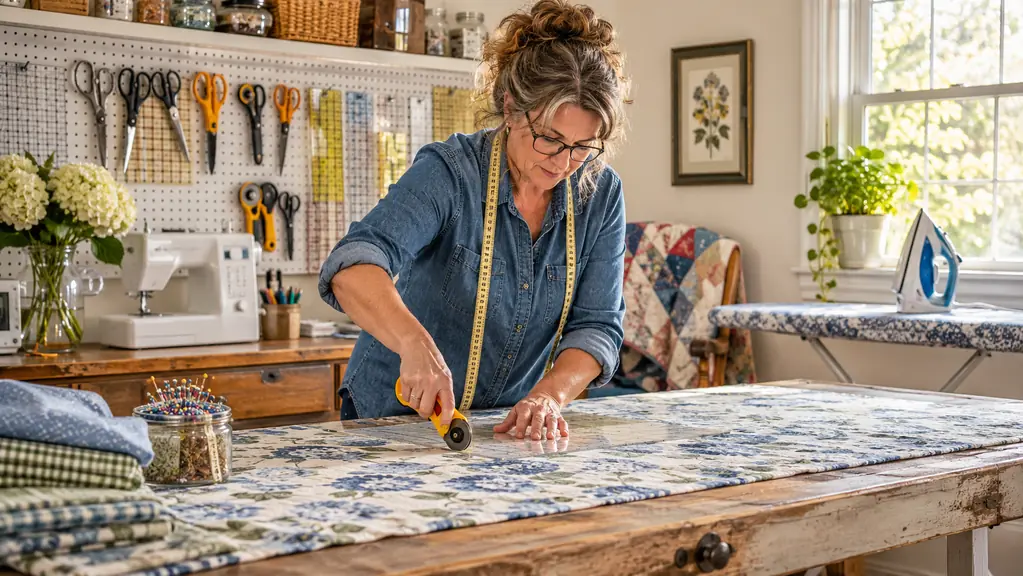
For the better part of a year, a half-cut quilt sat folded on the shelf in my sewing room. It was for my youngest granddaughter, and I had already picked the backing. I had not lost interest in it. I had lost the ability to squeeze.
I cut with shears for close to forty years. Good shears, sharpened twice, still in the drawer where I can find them in the dark. But shears ask for the same firm closing squeeze on every single cut, and after two hours my right thumb would be throbbing and my cut lines would drift off the ruler by a fat eighth of an inch.
So I tried all the sensible things. Shorter sessions. A rest day between steps. Cutting with my left hand for a week, which produced the ugliest pile of strips this house has ever seen. None of it touched the real problem. The tool wanted a strength I no longer had, and no amount of pacing was going to hand it back to me.
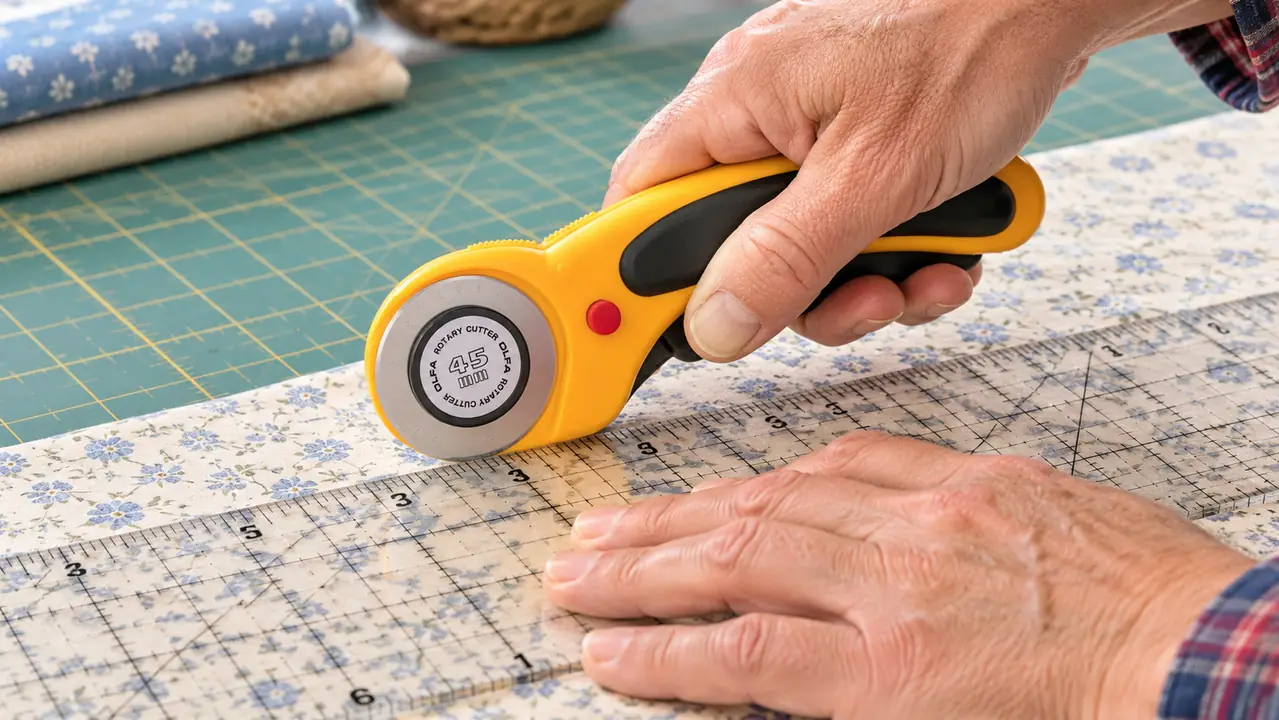
Then a neighbor who quilts, and who had listened to me complain for months, set an OLFA rotary cutter down on my cutting table. The 45mm squeeze-handle model. I rolled it once through a strip of cotton, set it down, and said a word my mother would not have approved of.
Here is where I want to be honest with you. A rotary cutter is not a cure for anything. My thumb still aches before rain, and I still stop to rest it. But the OLFA changed the job my hands had to do, and that turned out to be the whole fight.
The blade only shows itself while I squeeze. Let go and it pulls back inside the handle. I have set it down mid-cut a thousand times and never once looked at the edge.
It was never my hands. It was the squeeze.
The OLFA RTY-2/DX opens the blade only while you squeeze the trigger, then draws it back in on its own. A 45mm blade, a rubber handle, and 2.4 ounces in the hand.
Amazon Check Today's Price on Amazon →The mechanism is the whole story. The blade sits inside the handle until I close my hand on the trigger, and the moment I let go it retracts on its own. I put the cutter down on the table mid-cut a dozen times a session, which is exactly how a rotary cutter ends up slicing a fingertip. Mine never has.
The grip took a week to feel natural. It wants a whole-hand squeeze rather than a fingertip pinch, so the work moved out of my thumb joint and into the meat of my palm. That is the difference between a two-hour session and a twenty-minute one. It is also why the cutter lives on the pegboard now and the shears live in the drawer.
I broke it in on mending, not on quilting. Twelve pairs of jeans for the neighbors, all that heavy denim that used to fight back against the shears. One pass with the rotary cutter and the old hem was off clean. I know that sounds like a small thing, and it is. After a year of not cutting anything at all, it did not feel small.
The blade change surprised me more than the handle did. It comes apart in my hands without a screwdriver or a wrestling match, and OLFA built it so I am not chasing a loose blade across the table. This one came loaded with an RB45-1H Endurance blade, and it has held a clean edge through a full quilt top and a winter of mending.
It also takes OLFA's other 45mm blades, which I did not care about until I did. The pinking blade, the scallop and peak blade, the wave blade. I finish the inside of a hem with the wave blade now and skip a step I used to dread.
What it will not do is make you accurate. A rotary cutter needs a self-healing mat and a clear ruler, and it will happily run off the edge of that ruler if you push too fast or let your mind wander. A dull blade skips threads instead of cutting them, and you feel it before you see it. None of that is the tool's fault. It is the tool telling you to slow down and put a fresh blade in.
What I'd Tell You If We Were Sitting at My Kitchen Table
I would tell you to buy the mat before you buy a second cutter. A good self-healing mat and one clear ruler do more for your cut lines than any gadget, and the cutter is only as safe as the surface under it. I would tell you to practice on scraps until the squeeze feels like second nature, because the first ten minutes with a rotary cutter are clumsy for everybody, me included, and a scrap pile is cheaper than a ruined quilt top.
And I would tell you the thing that took me a year to learn. When your hands start making decisions for you, change the tool, not the hobby. I had quietly decided that hurting meant I was finished sewing, and I nearly gave a quilt away half cut because of it. I was not finished. I was using the wrong cutter.
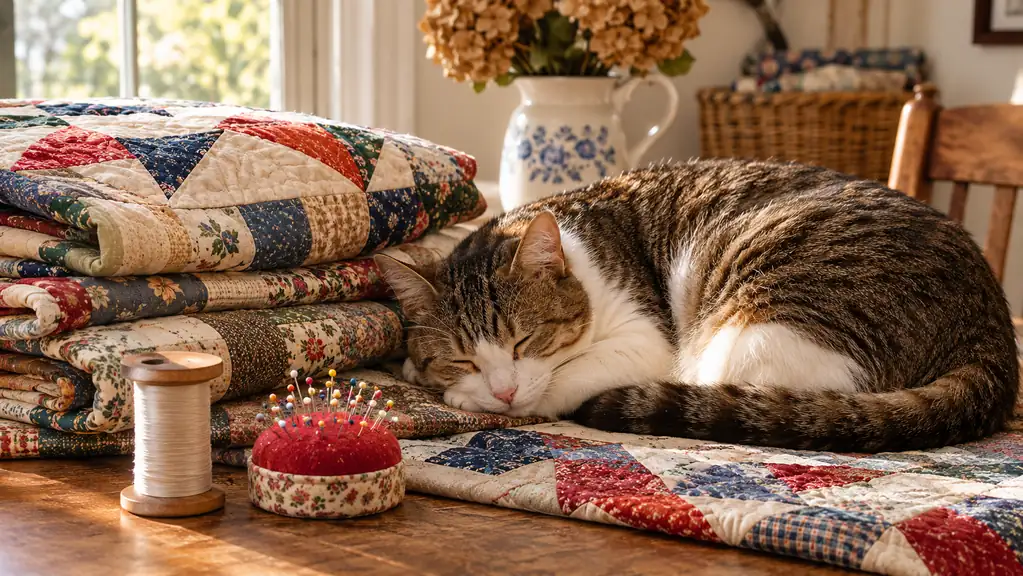
The quilt is bound and labeled now. It is not the finest thing I have ever made, and there is one block in the middle where I fudged a seam. Pockets has slept on it more nights than my granddaughter has. I would rather have spent that year sewing than waiting for my thumb to agree with me.
Change the tool, keep the hobby.
The OLFA RTY-2/DX squeeze-handle rotary cutter carries a 4.7 average across 9,529 ratings on Amazon. Start with the mat and the ruler you already trust.
Amazon See the OLFA Rotary Cutter on Amazon →