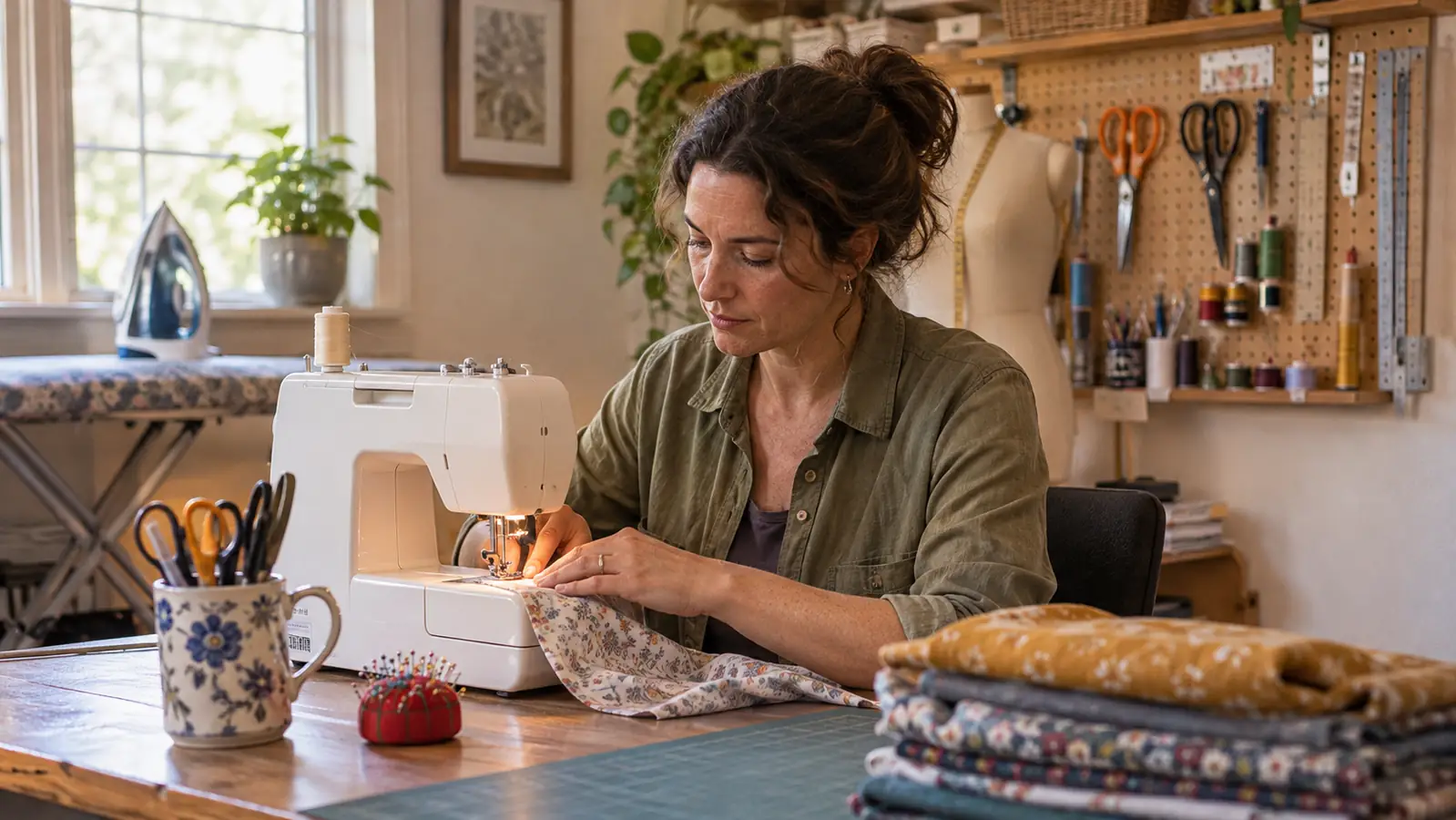
The first sewing machine I ever owned cost me a month of wages and needed a service call twice a year. So when a neighbor asked me whether a Brother that weighs twelve and a half pounds was worth her money, I did not give her an opinion off the top of my head. I told her I would use one for a few months and give her a straight answer afterward. That was in the spring. The machine is still plugged in beside my ironing board, and the answer has not changed since about week three.
This is the Brother XM2701, a portable machine with twenty seven built-in stitches, a drop-in top bobbin and an automatic needle threader. I have hemmed trousers on it for half the street, patched knees, pieced two quilt tops for grandchildren, and made myself one dress that I complained about from the cutting to the final press. I am seventy four and my right thumb has arthritis in it, which shapes how I judge every tool in that room. It shaped this more than anything else.
The Quick Verdict
A light, forgiving machine that does real mending and makes blind hems easy on hands that ache. Not the machine for heavy canvas, and not the machine if you want a dealer down the road.
Amazon Check Today's Price →The One That Never Got Put Back on the Shelf
Twenty seven stitches, a needle threader my thumb can work with, and a weight I can lift one-handed. Months in, it is still the machine I plug in first.
Amazon Check Today's Price on Amazon →How I've Used It
Months of ordinary, unglamorous work. That is the only kind of testing that tells you anything about a sewing machine. A machine can survive one pleasant afternoon of straight seams on quilting cotton and still come apart at the seams on the third pair of work trousers in a row, and the reviews that call a machine wonderful after a single project are not telling you much of anything.
The work comes in cycles in my house, because the neighbors know I sew. Trousers to hem, waistbands to take in, a canvas tote bag somebody wanted reinforced at the handles, three work shirts with patches to go on the sleeve, a cushion cover with a zip that had given up. In between the mending I pieced two quilt tops, squared up the blocks, and finally did the hems on a pair of linen curtains that had been folded on the shelf since last winter.
The XM2701 is corded electric and it stays plugged in beside the ironing board. It weighs 12.6 pounds and measures about fifteen inches deep by twelve high, so it sits at the end of my cutting table without crowding the fabric out of the way. When the quilt frame comes out of the closet, I pick it up with one hand and set it on the shelf above. One hand. My thumb notices that every single time.
Pockets is my cat, nine years old and gray, and he treats any fabric laid out flat as a bed made for him. Because the machine is small enough to move, I have lost fewer arguments with him over the cutting table this year than last. I keep a lint roller on the pegboard for the seams he insists on sleeping on, and I have learned to cover anything I have already pressed.
The 27 Stitches, and Which Ones Earn Their Keep
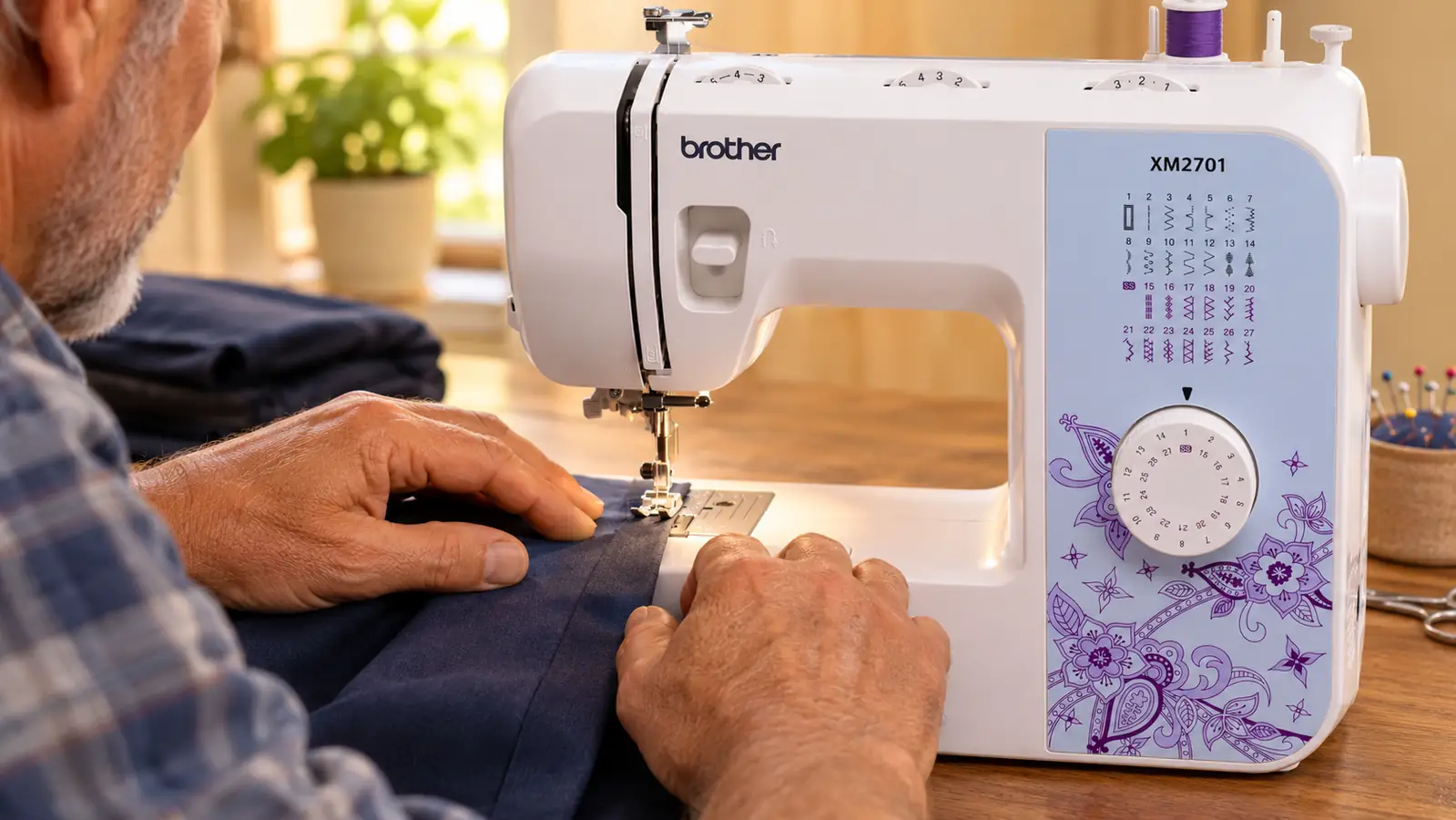
Twenty seven built-in stitches is the number printed on the box, and it is the number most people quote when they are comparing machines. I am going to be honest with you, the way I would be at the counter: most sewists use four or five stitches and ignore the rest of the menu entirely. The count by itself should not decide anything for you.
What matters is which stitches are in there, and Brother included a blind hem. A blind hem is what the inside of a properly finished trouser leg looks like, the stitches catching a thread of the folded edge so they disappear into the cloth. I did those by hand for twenty two years behind an alterations counter, turning a quarter inch under and picking up one thread at a time, and I was quick at it. The machine does one in a fraction of that time once you have the fold pressed properly. That one stitch is why this machine has kept its place on my table.
The decorative stitches are pleasant for quilt labels and children's things. I ran a line of them across a label for my youngest granddaughter and it took less time than writing her name by hand would have, and it looked tidier when it was done. I will not pretend I use them often. I will say that when I want one, it is there and it does not fight me.
The rest of them are what you would expect to find on a home machine of this kind, and several I have never once chosen. That is fine. A machine does not have to earn its keep with twenty seven stitches. It has to earn it with the two or three you reach for without thinking about it.
The First Week, and the Mistakes I Made
Out of the carton the machine needed a bobbin wound and the needle checked, and that was the whole of the setup. The manual is in plain English, which is not a small thing. I had a trouser hem finished inside an hour and a half, and half of that was me reading the bobbin section twice to be sure I had it right.
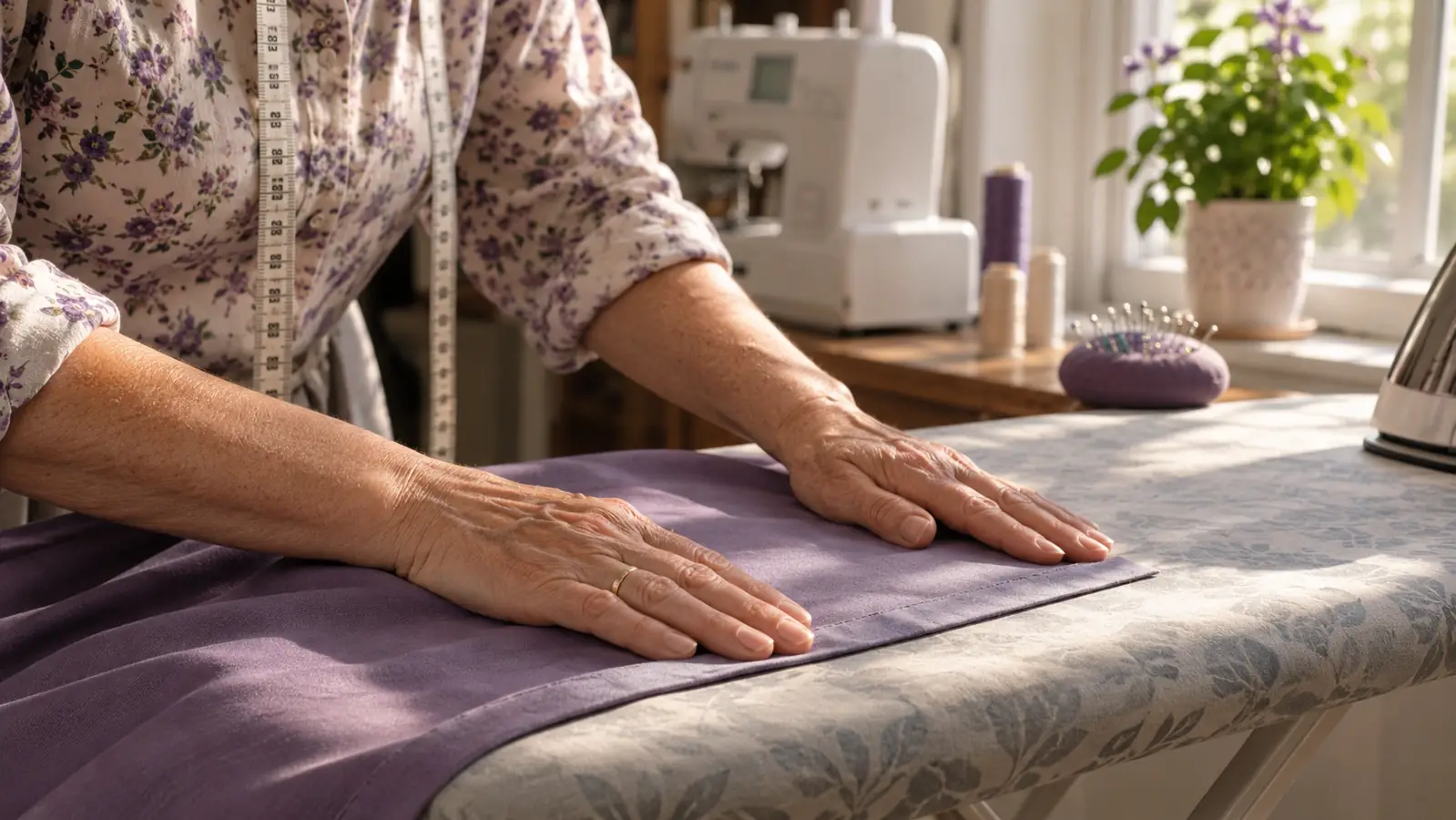
The first week is where I made my mistakes, and they were mine and not the machine's. I sewed faster than I should have on a scrap of slippery lining and got a tangle underneath that took ten minutes to pick out with a seam ripper. Once I slowed down and pressed the fold before it went under the needle, the trouble stopped and never came back. If I could tell a new owner one thing, it would be that. Press the fold first, then sew. No machine can fix a fold that was never pressed.
Threading, Bobbins, and the Arthritis Question
The automatic needle threader is the reason I would recommend this machine to anyone whose hands have started to argue with them. Fiddling a thread through the eye of a needle held out at arm's length is the most tedious part of sewing, and it gets worse every year your thumb gets sorer. I can use this threader without putting my reading glasses on, which tells you more about it than any specification will.
The drop-in top bobbin is the other half of that same relief. You lift the lid, drop the bobbin in, lead the thread through the slot and close it up. There is no bobbin case to thread by feel underneath the machine and no reaching around the back where you cannot see what you are doing. Four bobbins come in the box, along with a needle pack, a twin needle, a screwdriver and a darning plate, and there are six feet included, so you are not out buying the basics before your first project.
I want to be careful about what I claim here. The machine does not thread itself and nothing happens by magic. You still bring the thread across and you still have to pay attention to what you are doing. What it takes away is the part that made me put projects off until my thumb felt better, and that is worth more to me than any feature printed on a box.
What Months of Use Taught Me
Seam quality on ordinary cottons and blends was the same in the hundredth week as in the first. I did not have to reset the tension after carrying the machine from the table to the shelf and back again, which is more than I can say for machines I have owned that cost several times as much and weighed several times as much with it.
The light weight cuts both ways and you should hear both sides. At 12.6 pounds it is easy to lift and easy to store, and it is also light enough that on heavy canvas I found myself steadying the body of the machine with my left hand while I guided the fabric with my right. Nothing went wrong. It is simply what a portable machine does, and if you expect it to sit like a cabinet model you will be disappointed by physics rather than by Brother.
The listing shows no warranty, and I would rather say that plainly than let you find it at the bottom of the page and feel misled. Twenty years ago that would have stopped me from buying. Now it means I keep the manual in the drawer, I look after the machine, and I do not count on a service call. A warranty is not what keeps a machine running. Cleaning the lint out of the bobbin area is what keeps a machine running.
Where It Fights You
Very fine fabric is where I liked it least. Sheer curtain fabric and slippery lining wanted a stabilizer underneath and a slower hand on my part, and I did not enjoy that work on this machine the way I enjoy it on a heavier one. It will do the job. It will not flatter you while you do it.
Bulky seam intersections take patience. Crossing the corner of a tote bag handle where four layers meet means turning the hand wheel rather than letting the machine pull the work through. I have done it more than once and it came out clean. I would not want to do it all afternoon.
And the honest one, the one I would say across the counter with my hand on the machine: this is a sewing machine for a home sewist. It is not built for upholstery, for hemming denim by the dozen, or for anything that needs the fabric held firmly and pulled from underneath. Buy it for the work you actually have and you will be pleased with it for years. Buy it for work it was never meant to do and you will blame the machine for your own choice.
What I Liked
- Blind hem preset that turns a hand-finished look into a machine job, done in a fraction of the time
- Automatic needle threader and drop-in top bobbin, both kind to arthritic hands
- 12.6 pounds and corded electric, easy to lift onto a shelf between projects
- Six feet, four bobbins, twin needle and darning plate in the box, no extras to buy first
- Held its tension through months of mending, quilting and one much-complained-about dress
Where It Falls Short
- No warranty shown in the listing, so buy it knowing that
- Light enough to shift on heavy canvas unless you steady it with your other hand
- Fights sheer and slippery fabrics without a stabilizer underneath
- Bulky seam intersections need the hand wheel and some patience
- Decorative stitches are there, but most sewists will never choose them
A blind hem I can set and forget is worth more to me than twenty stitches I will never once choose.
Who This Is For
The home sewist who mends, hems, patches and quilts, and who wants a machine that sets up on the table and goes back on the shelf. If your week involves a pair of trousers that need an inch off the bottom and quilt blocks that need squaring, this machine does that work without ceremony and without asking anything of you.
It also suits anyone whose hands are not what they were. I say that as a woman with a sore thumb and a low tolerance for fiddly work. The needle threader and the drop-in bobbin are not luxuries to somebody whose grip has gone. They are the difference between starting the project on Monday and putting it off until the mood passes, and the mood passes less often than it used to.
Who Should Skip It
Skip it if you sew mostly heavy fabric. Denim, canvas, upholstery weight, bag making with layers of interfacing and foam. The machine will sew a seam in those, and you will spend the whole time managing the machine instead of the fabric. There are heavier machines built for exactly that work and this is not one of them.
Skip it if you want a shop that services what it sells. The listing shows no warranty, so if that relationship matters to you, buy where you can get one and pay for the peace of mind. And skip it if you want a machine to embroider with, or to sit at for six hours without a break. That was never what this machine was for, and it would be unfair to hold it to it.
It Has Earned Its Corner of the Table
Months in, the XM2701 is still the machine I plug in for the neighbors' mending and my own quilting. If that is the work on your table, this is the machine for it.
Amazon Check Today's Price on Amazon →