A machine does not have to do everything. That is the whole argument, and I will make it plainly. The Brother XM2701 is a portable machine with 27 built-in stitches, and it covers most of what crosses a home sewist's table. I spent twenty-two years at an alterations counter in a dry cleaner, taking up other people's trousers and letting out other people's waistbands, and the lesson from that counter is short. The machine that gets used is the one already threaded and sitting out, ready. The fancy one in the closet never helped anybody.
You have seen the other kind. Two hundred stitches, a screen, a price that makes you gulp. The catalog makes you feel behind before you have sewn a seam. Then it arrives and you need the manual to wind a bobbin, and the manual is in a drawer, and the fabric is still folded on the table. A simple machine removes that argument entirely. Here are ten reasons the Brother XM2701 earns its spot on my table, in plain terms.
Twenty-seven stitches, twelve point six pounds, already threaded and waiting
That is the whole case for the Brother XM2701. Check the current price and the full stitch list on Amazon before your next hem.
Amazon Check Today's Price on Amazon →27 stitches cover the mending you actually do
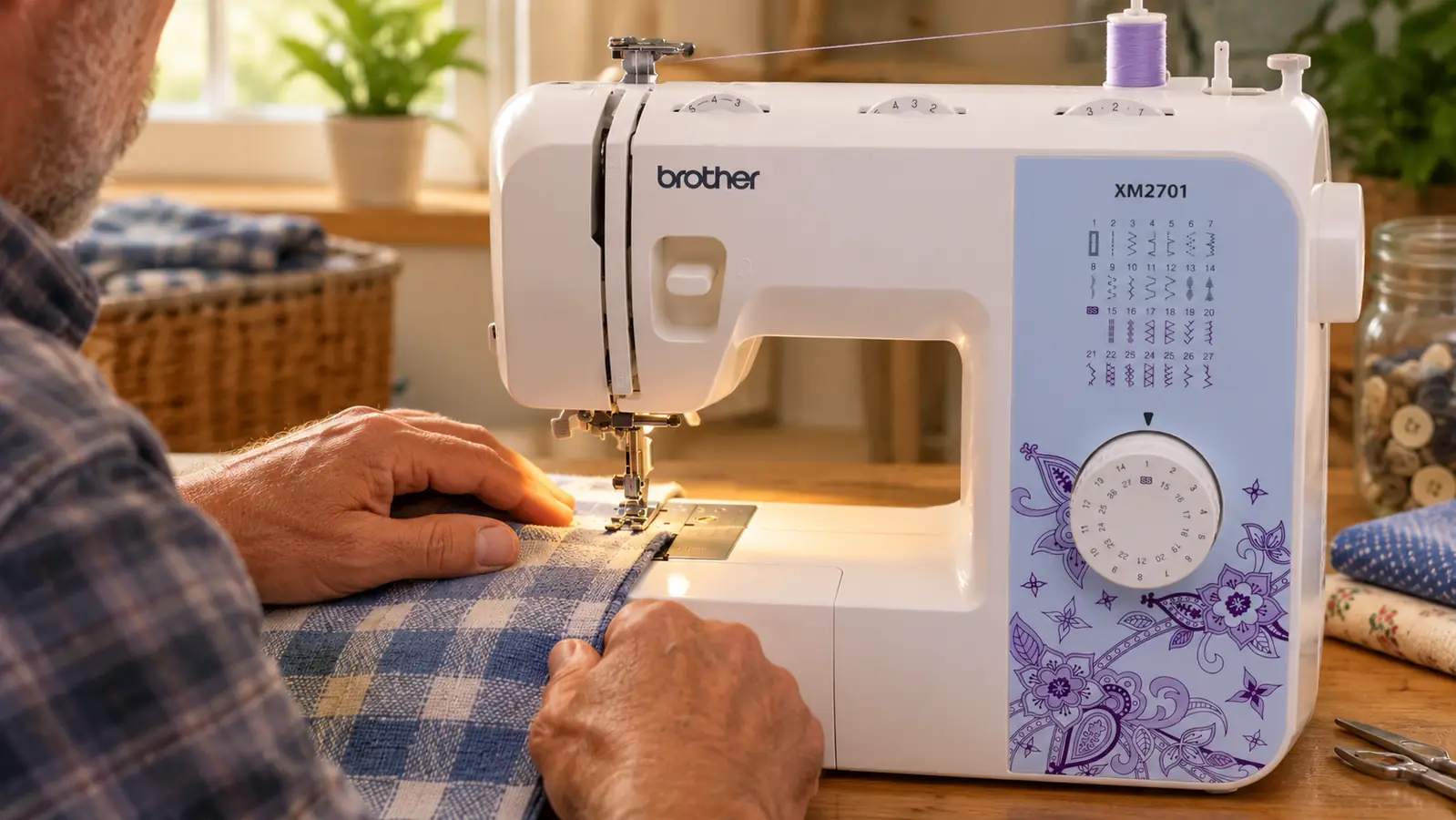
Twenty-seven sounds small next to machines advertising hundreds. Count what you really sew. A straight stitch for seams. A zigzag for knits and for finishing a raw edge. A blind hem, which the listing names, for trousers that should not show a stitch from the outside. Decorative stitches, also named, for a quilt border or a hem facing. I hemmed for a living and used three stitches most days. Twenty-seven is room to grow without a menu to memorize.
The automatic needle threader saves a sore thumb
My right thumb has arthritis in it, and threading a needle by hand is the part of sewing that makes me set a project down. This machine has an automatic needle threader, and it is the feature I would fight to keep. You bring the thread across, you press, and the needle is threaded. No squinting. No wetting the thread end. No third attempt with the light behind you. If your hands are stiff in the morning, this one detail decides how long you can sew in a sitting.
A drop-in top bobbin you can load sitting down
Older machines make you take the whole thing apart to reach the bobbin, and the bobbin case is where tempers get lost. This one uses a drop-in top bobbin. You lift the lid at the top, drop the bobbin in, run the thread through the slot, and close it. It is a thirty-second job and you can do it without turning the machine over. The carton carries four bobbins, so you can wind one for a project and keep a second loaded with a contrasting thread.
Six presser feet arrive in the box, not one
The foot is what holds the fabric down, and different jobs want different feet, so a machine that arrives with six of them saves you a second trip to the shop. The included accessories list also covers a three-piece needle set, a twin needle, a darning plate, a screwdriver, an accessory bag with a needle pack, and the manual. I have bought enough accessories one at a time to know the value of a kit that comes whole. Every piece in the bag is one less reason to stop in the middle of a hem.
12.6 pounds moves off the cutting table one-handed
Twelve point six pounds. That is the whole number, and it is why this machine lives on my cutting table instead of in a cupboard. I can pick it up with one hand, set it by the window on ironing day, and put it back when the board comes out. Machines that need two hands and a clear path get left where they are. Machines you can shift in a second get used on a Tuesday night for a five-minute hem, and that is the whole difference.
It fits the space you actually have
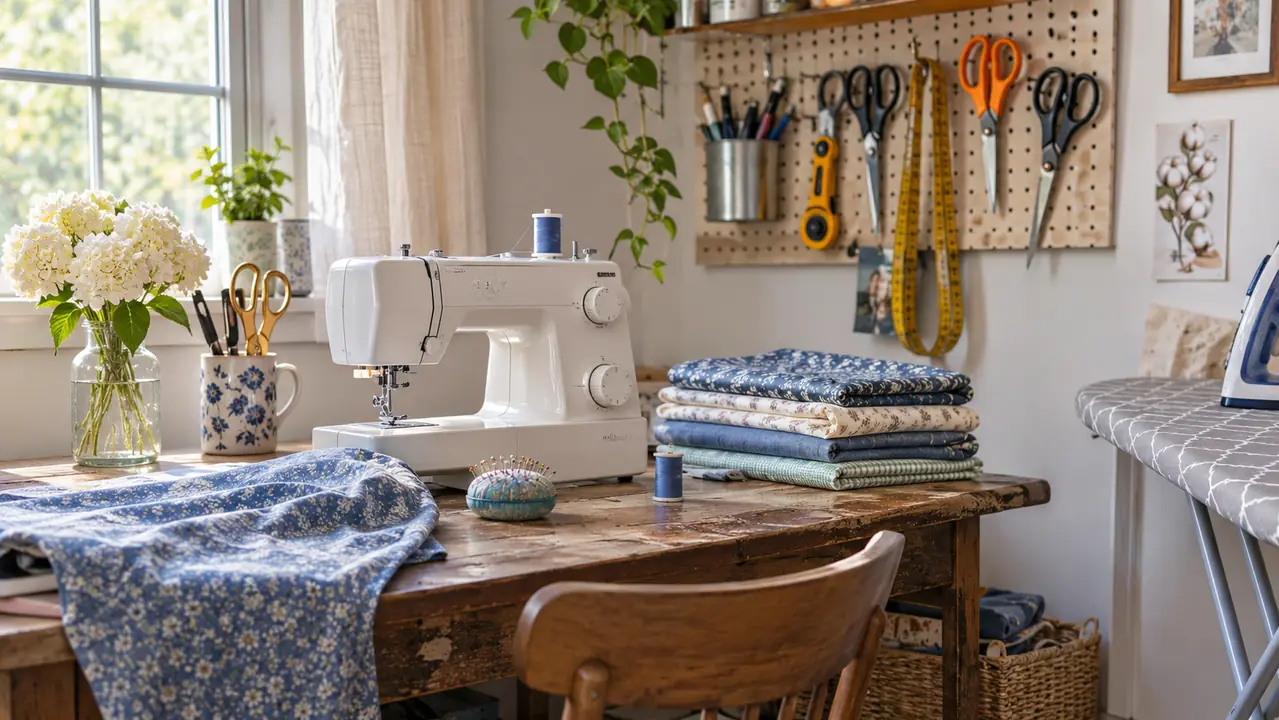
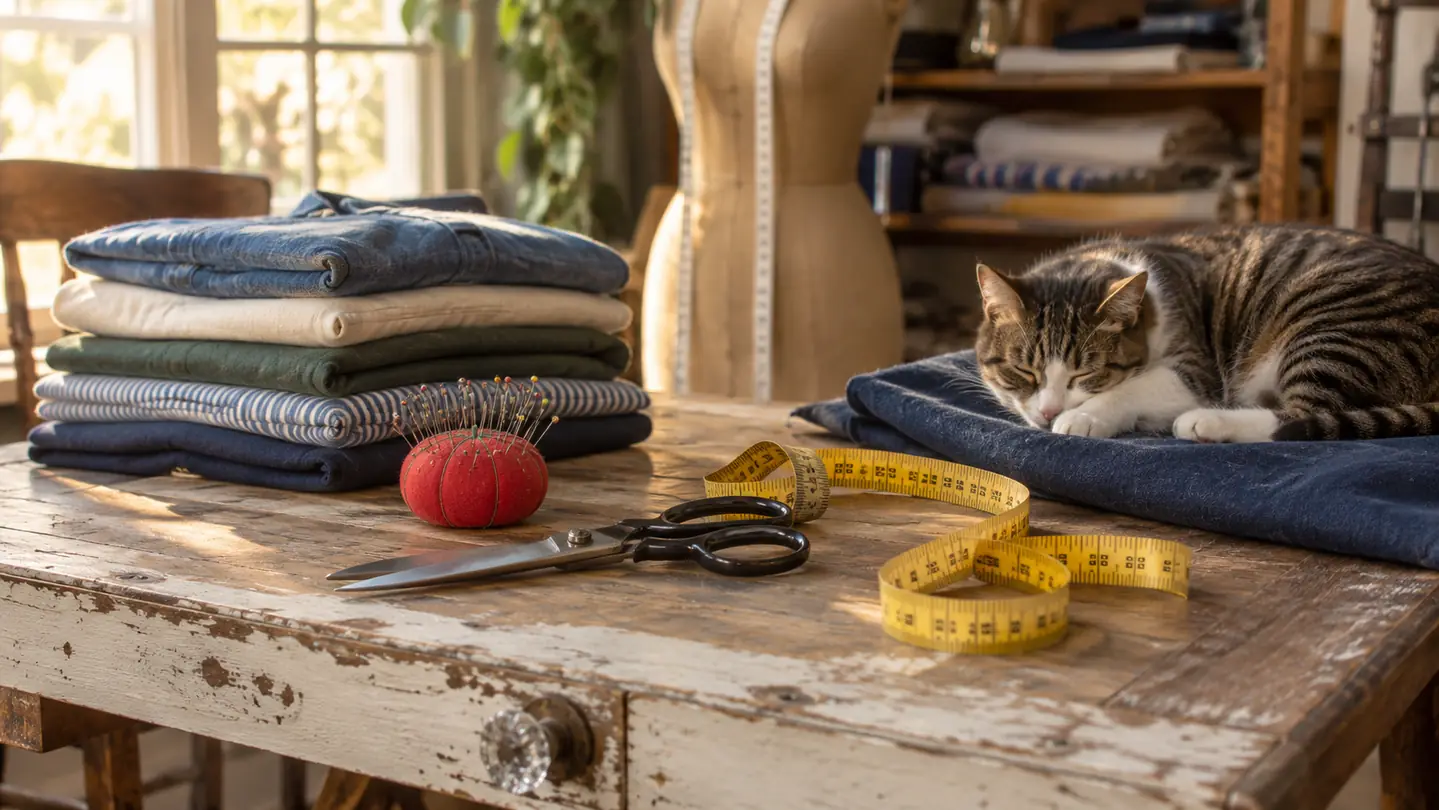
My sewing room is the spare bedroom, and that room has to hold a cutting table my late husband built from an old door, an ironing board, a pegboard of tools, and whatever Pockets has decided to sleep on. Floor space is not free. Brother gives the dimensions as 15.3 inches deep by 5.86 inches wide by 12.01 inches high, so measure your table and your shelf before it arrives. A machine that fits where you sew is worth more than one that only fits in a photograph.
Corded electric at 120 volts, no battery to fade mid-seam
The XM2701 is corded electric and runs on 120 volts, which means no battery to give out halfway down a long seam and no charging cable lost behind the table. You plug it in, you sew. For a home sewist that steadiness beats any feature you have to remember to switch on. I have sewn denim hems and quilt binding on corded machines my whole working life, and I have never once wished for a battery under the needle. Simplicity in the power supply is not a compromise. It is the point.
Twin needle, four bobbins and a needle set are already in there
The twin needle in the box gives you two parallel rows on top with a zigzag underneath, which is the neat finish you see on the hems of knit shirts. Four bobbins and a three-piece needle set mean a bent needle on a Sunday afternoon does not end the project. None of this is glamorous. All of it is the difference between finishing the hem tonight and driving to the shop tomorrow morning. A home sewist's tools should remove reasons to stop, and this carton does that.
One machine for hemming, quilting and a dress for yourself
I mend for neighbors, I piece quilts for grandchildren, and once a year I make myself a dress. That is three kinds of sewing, and this machine handles all three without changing anything but the stitch and the foot. The 27 built-in stitches cover the seams, the edge finishing and the blind hem. The listing gives the material as metal, which gives it a settled feel under the hands. You do not need three machines for three hobbies. You need one that is set up, plus a drawer of the right feet.
It stays set up, which is why it gets used
Here is the reason that outranks the other nine. A simple machine stays out. Mine sits with a spool on the pin and a scrap of muslin under the foot, and when a neighbor brings trousers with a split seam, I sit down and I am sewing in fifteen seconds. The machine you have to configure is the machine you avoid. Twenty-seven stitches, twelve point six pounds, one cord. That is a machine you will actually use, and used beats capable every time.
Twelve point six pounds, and I can lift it off the cutting table one-handed. That is why it stays out, and staying out is why it gets used.
What I'd Skip
Two honest notes before you decide, and then a measurement. First, the listing carries no warranty description, and I will not pretend otherwise. If a warranty matters to you, ask the seller before you buy and keep the answer in writing. Second, if your sewing is monogrammed linens or heavy upholstery every week, this is not that machine. Twenty-seven stitches and a portable build are made for garments, quilts and mending, and a heavier machine earns its keep in a different room. Then the measurement: 15.3 by 5.86 by 12.01 inches and 12.6 pounds. Check it against your table. What I would not skip is the automatic needle threader and the drop-in top bobbin, because those two are why my hands and my patience survive an afternoon at the machine.
The machine you will actually use is the one worth buying
Mending, quilts, and a dress for yourself. One corded machine, 27 stitches, six feet in the box. See today's price on Amazon.
Amazon Check Today's Price on Amazon →