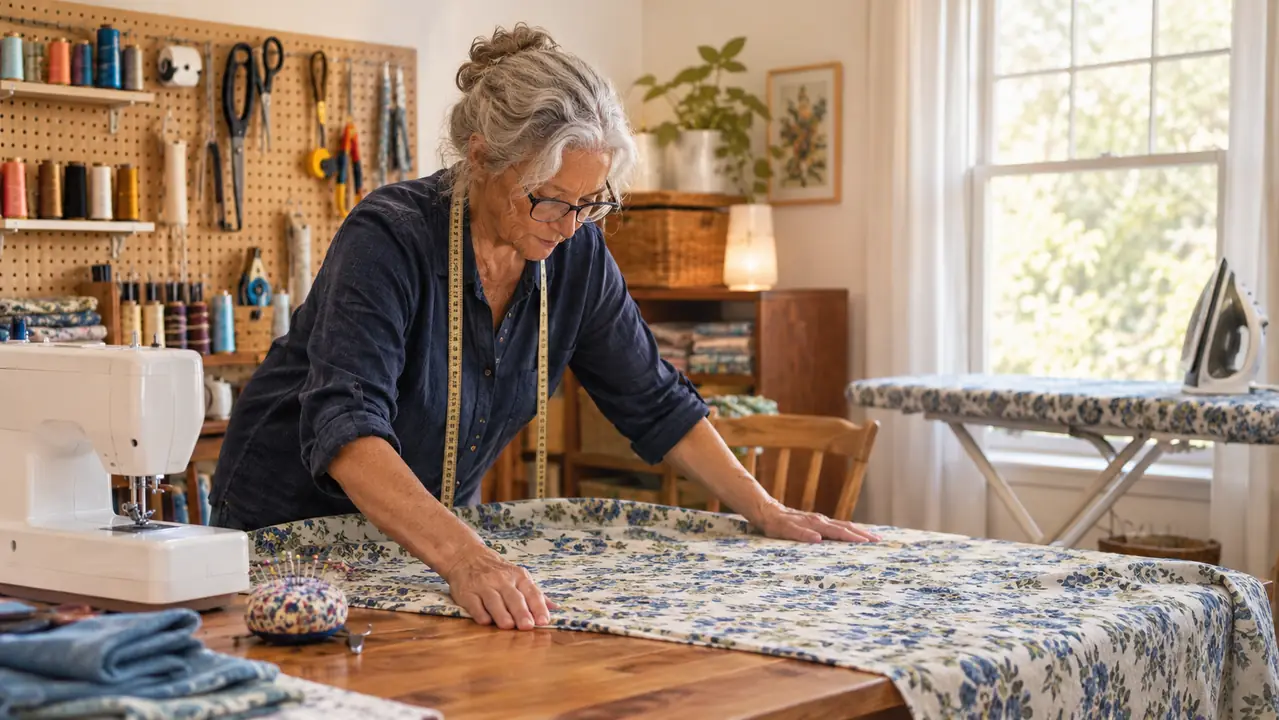
The bobbin winder on my old machine quit in March. I remember the month because I had six pairs of work pants waiting to be hemmed for the girls at the diner, and a quilt top for my granddaughter half finished on the cutting table my late husband built out of an old door. Fifty years of sewing and I have never once enjoyed being without a machine. So I did what I always do when a tool lets me down. I complained for a week, and then I went shopping.
I had in mind one of those heavy old workhorses, the kind you could drop off a porch and it would still sew a straight seam. What I found in the shops was a wall of light machines that hummed like a refrigerator and felt like they were made of the same plastic as a cooler lid. I am seventy-four and my right thumb aches in damp weather, so I am not interested in fighting a tool. I want to sit down, thread it, and sew. The Brother XM2701 was the one that came home with me.
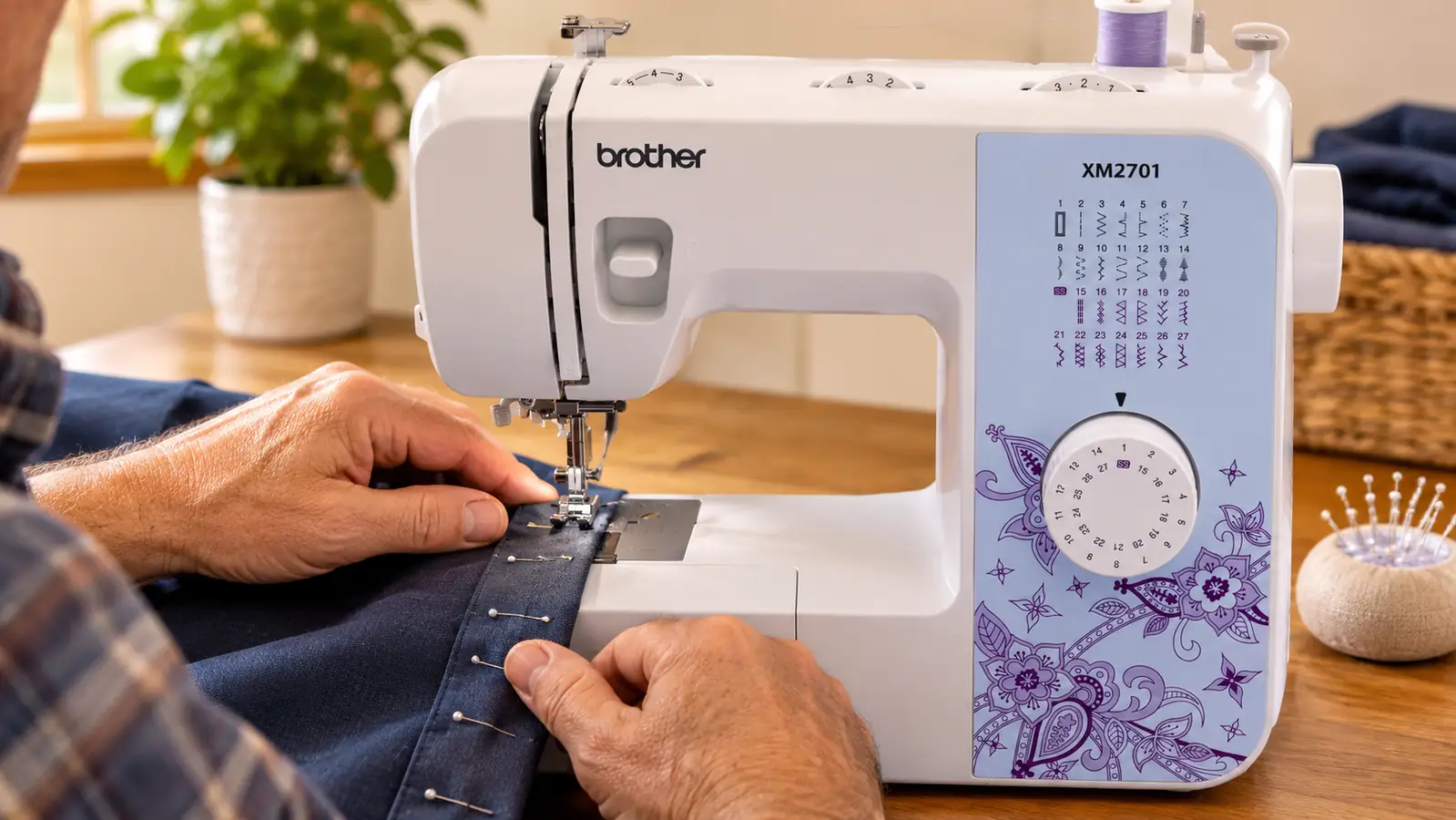
It weighs 12.6 pounds, which I can lift off the shelf with one hand. The footprint is 15.3 inches deep by 5.86 wide by 12.01 high, so it lives on the corner of the cutting table and still leaves room to lay out a pattern. It is corded, 120 volts, nothing clever about the power. You plug it in, flip the switch, and the light comes on.
Two things sold me before I ever sewed a stitch. The first is the automatic needle threader. With an arthritic thumb, threading a needle by eye was the part of the job I dreaded most, and I will admit I had gotten into the habit of waiting for a neighbor to come by. The second is the drop-in top bobbin. You set it in from the top, run the thread through the slot, and you are done. No reaching under the bed, no fumbling a bobbin case out with your fingernails while your glasses fog up.
I have threaded a needle ten thousand times in my life. The first time this machine did it for me, I laughed out loud in an empty room.
The needle threader is the reason I stopped dreading the job
The Brother XM2701 threads itself, sets the bobbin from the top, and weighs 12.6 pounds, so it goes back on the shelf when the work is done. Twenty-seven built-in stitches and six sewing feet come in the box.
Amazon Check Today's Price on Amazon →The first real job was the diner pants. Six pairs, each needing about an inch off, and I did them in a single sitting. The blind hem is one of the 27 built-in stitches, and it gives you a hem you can barely see from the right side. I pressed as I went, the way I always do, and by the end of the afternoon I had a finished stack and a machine that had not skipped a stitch or snarled a bobbin.
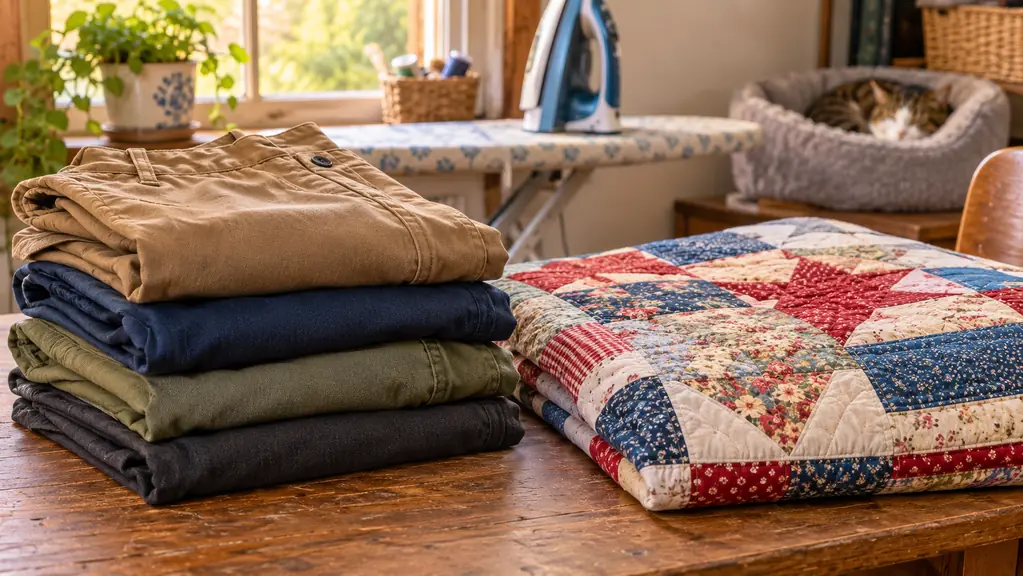
It is not a heavy machine, and I will not pretend otherwise. When I ran a quilt through with batting and a backing layer, I had to slow down and let the feed dogs pull rather than pushing the layers myself. It handled the job, but it wanted to be guided, not shoved. For upholstery, canvas, or a pair of stiff work jeans, I would look at something with more muscle. And there is no warranty on this one, which is worth knowing before you buy rather than after.
What comes in the box matters more than people give it credit for. Six sewing feet, a three-piece needle set, a twin needle, four bobbins, a darning plate, a screwdriver, and the accessory bag to keep it all together. I have owned machines where I had to go out and collect the feet one at a time before I could do a buttonhole. Here you can sit down and sew a straight seam, a zigzag, a blind hem, or a decorative row without ordering a thing.
The surprise is how often I use the decorative stitches. Twenty-seven sounds like a number on a box until you are running a row of small stars along the hem of a child's dress, or a scallop across a tea towel for the neighbor who looked after Pockets while I was away. That gray tabby supervises from whatever fabric I have laid out, which is why the lint roller and the covered storage live right next to the machine now.
What I'd Tell You If We Were Sitting at My Kitchen Table
If we were at my kitchen table with a cup of tea, here is what I would say. Measure your space before you shop, because a machine you have to clear off the table every time is a machine you will stop using by June. Then decide what you actually sew. If it is mending, hemming, quilting, and the occasional dress for yourself, a machine like the Brother XM2701 covers all of it and does not ask much of your hands. If you are reupholstering furniture or building workwear, save up and buy something heavier, because you will only be frustrated. And buy thread you trust, change the needle more often than you think you should, keep the bobbin area clean, and press your seams as you go. The tool helps. The habits are what make the garment. This one earns its place on my table, and it earns it honestly, with a few jobs it should not be asked to do.
If your hands are tired and your old machine is tired too
The Brother XM2701 threads the needle for you, sets the bobbin from the top, and weighs 12.6 pounds. Twenty-seven stitches, six feet, and nothing to figure out on the first afternoon.
Amazon Check Today's Price on Amazon →