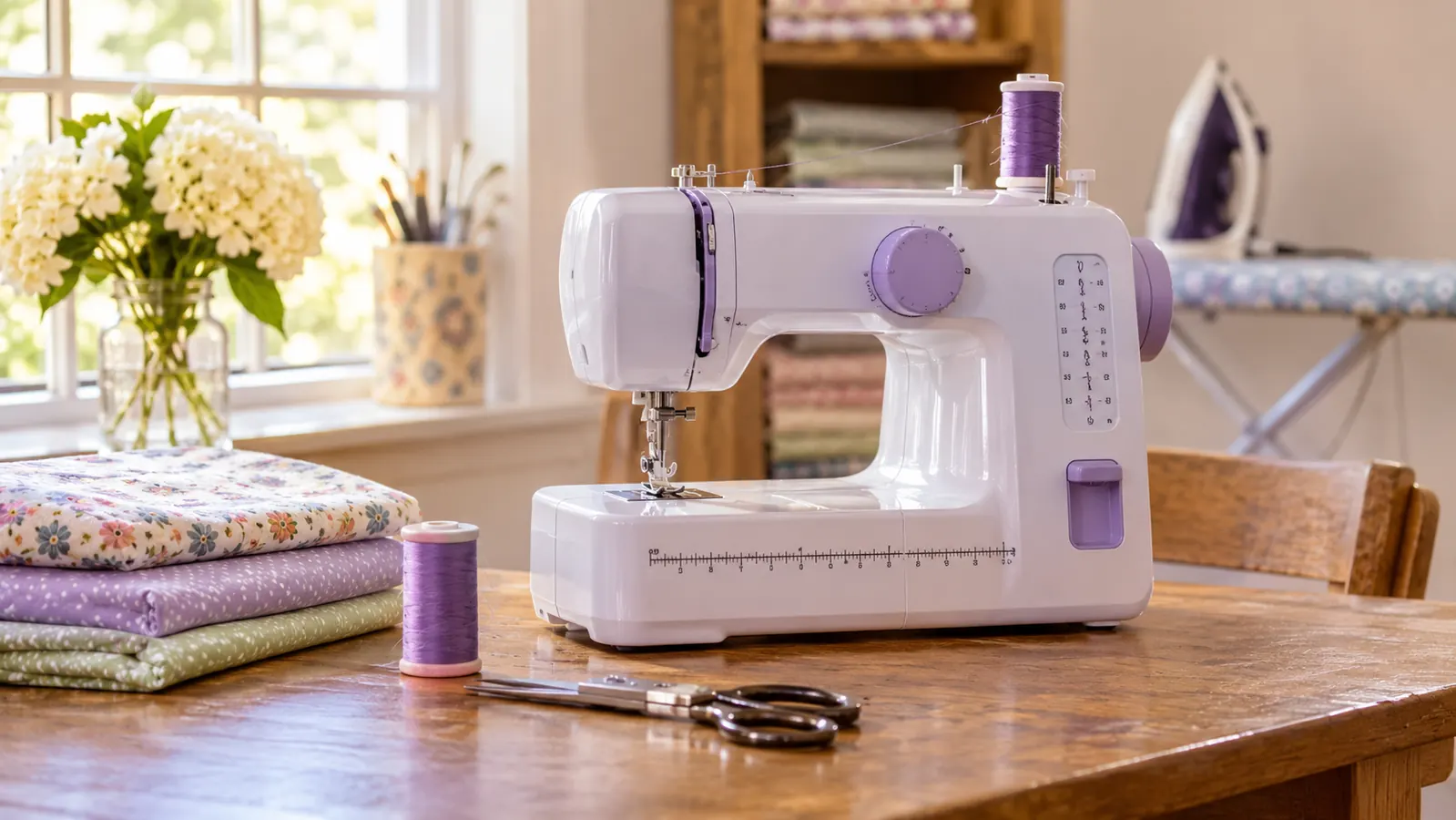
Nobody tells you that the hard part of learning to sew is not the machine. It is the pressing. You sew a seam, you carry it to the ironing board, you press it flat, and then you sew the next one. That is the whole craft in a single habit. But you still need a machine that will not fight you while you build the habit, and that is the only question worth asking about a beginner model. I have sewn for more than fifty years. I ran an alterations counter inside a dry cleaner for twenty two of them, hemming trousers for people who wanted them back by Friday. So I know what a machine has to do when the work is ordinary, and I know what it has to do when your hands are tired.
The Brother XM2701 is the machine people keep asking me about. Partly it is the price of a first machine, partly it is that the model has been on the market long enough to have a real track record. This is my honest read on it after using one on my own table for months. It is a good machine for one kind of sewing and a frustrating one for another, and the difference has very little to do with the stitch count printed on the box.
The Quick Verdict
A light, genuinely simple machine for mending, hemming, and piecing quilts, with a needle threader and a drop-in bobbin that suit stiff hands. It is not built for heavy fabric, and the warranty field on the listing reads none.
Amazon Check Today's Price →The needle threader is the reason to look at this one
Twenty seven stitches gets the attention. The automatic needle threader and the drop-in top bobbin are what you notice at four in the afternoon when your hands have had enough. Check today's price and see whether it still makes sense for the sewing you actually do.
Amazon Check Today's Price on Amazon →How One Ended Up on My Table
My sewing room is the spare bedroom. There is one cutting table my late husband built out of an old door, an ironing board by the window, and a pegboard wall of tools I have been adding to since the seventies. The machine on the table is not the only one I own. I keep a heavier machine for denim and bag straps, and I am not going to pretend one machine does everything, because it does not.
What I wanted from the Brother was a machine I could leave threaded and ready for the small jobs. A neighbor's curtain hem. A patch on a work shirt. A quilt block pieced on a rainy afternoon. Something I could set on the table without lifting with both arms and grunting. The machine weighs 12.6 pounds and measures 15.3 inches deep by 5.86 inches wide by 12.01 inches high. I can move it from the shelf to the table with one hand, and at seventy four with a right thumb that complains by mid afternoon, that matters more than any feature on the box.
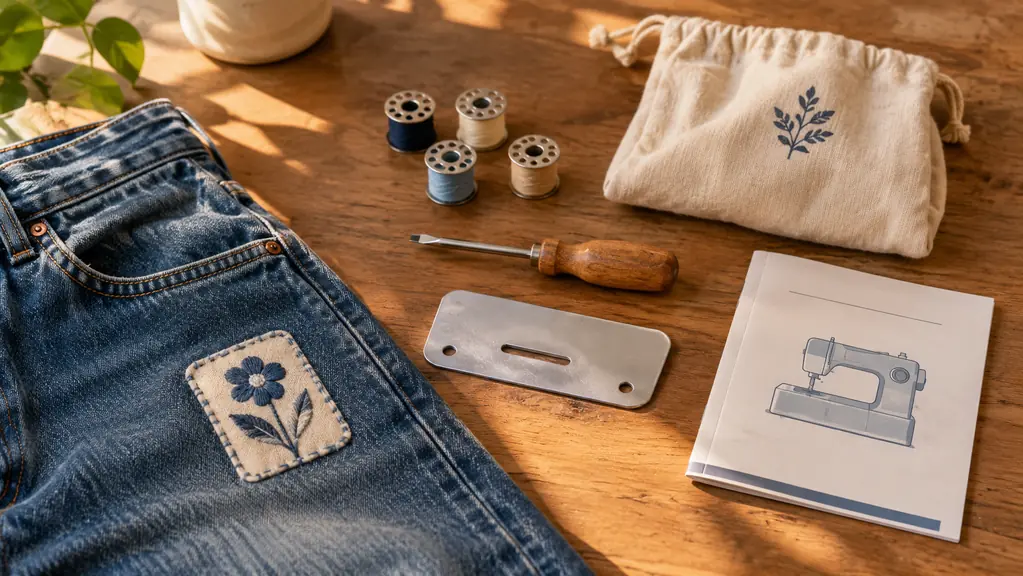
It is a corded electric machine, 120 volts, and the listed contents include a darning plate, six presser feet, a three piece needle set, a twin needle, four bobbins, a screwdriver, an accessory bag, and a manual. The manual is thin. More on that below.
What Nobody Tells You About the 27 Stitches
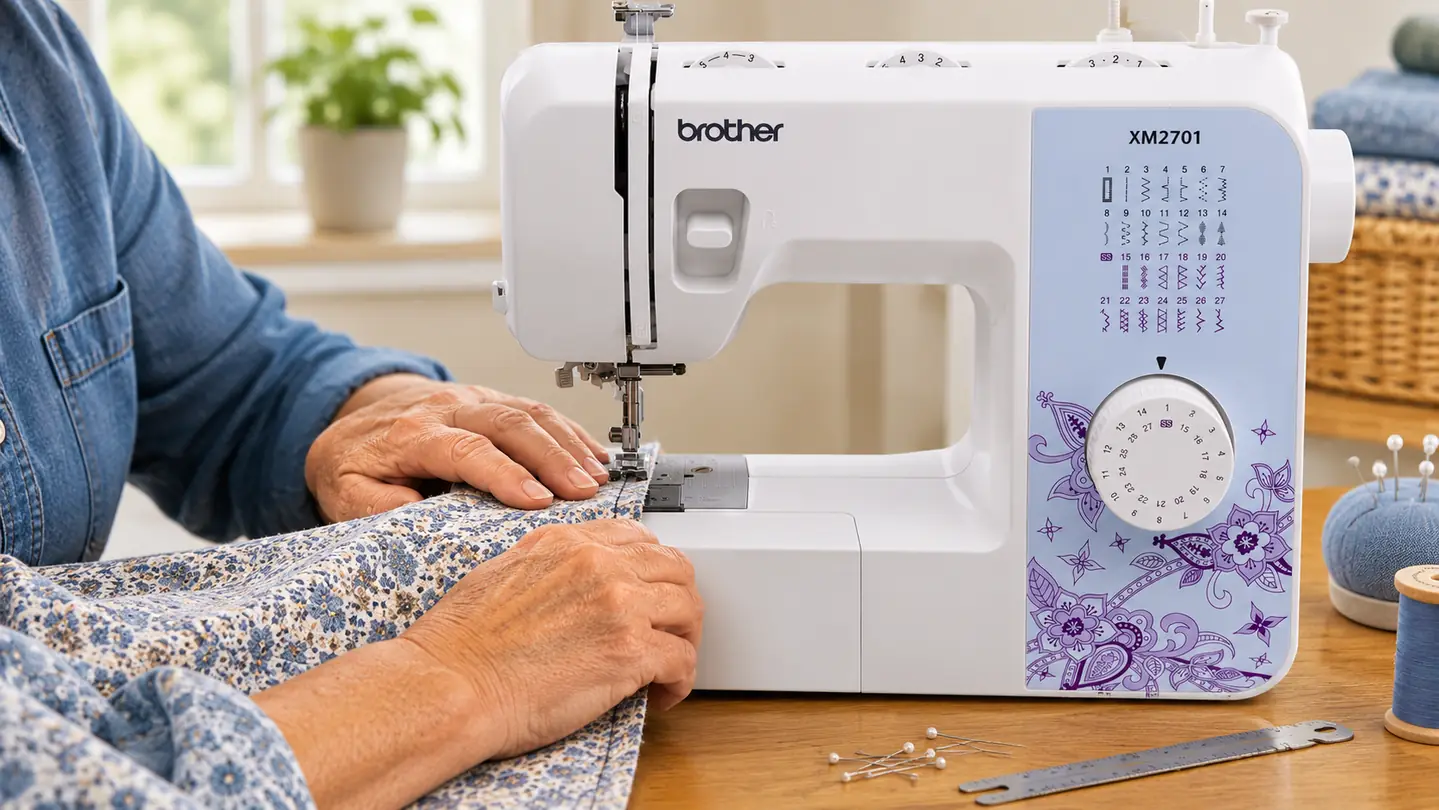
You will use three of them. That is not a knock on this machine, it is true of every machine ever sold. Straight stitch, zigzag, and whichever stretch stitch suits the knit in front of you. The rest are decorative work and blind hem, and the blind hem is the one that earns its place. If you hem a skirt or a pair of dress trousers and you want the stitching to nearly disappear from the right side, the blind hem stitch does that. It is the reason I keep this machine threaded instead of packed away.
One job taught me what the blind hem is worth. A neighbor brought over a pair of lined wool trousers, her husband's, and asked whether they could be shortened without the alteration showing from across a room. I chalked the hem line, pressed the fold, set the machine to the blind hem, and watched the stitching sink into the cloth so completely that you had to turn the cuff inside out to find it. Thirty minutes from chalk to final press. Hand hemming that same pair by lamplight would have cost me an evening and a sore thumb, and it would not have looked any better.
The decorative stitches are pleasant, and I have used them on quilt labels and on the hem of a dress I made for myself. A grandchild learning to sew will get a great deal of enjoyment out of a row of them on scrap fabric. They are not why you buy the machine, but they are not filler either.
The darning plate deserves its own mention. You set it over the feed dogs and the machine stops pushing the fabric along, which lets you move the fabric yourself under the needle. I have darned the heel of a sock and patched the knee of a boy's jeans that way. People assume mending like that needs a special tool. It needs a plate and a bit of patience.
The Threader and the Drop-In Bobbin Are the Real Features
The automatic needle threader is the feature I would pay for on its own. My right thumb does not pinch the way it used to, and threading a needle by hand in poor light is the most reliable way I know to end a sewing session in a bad mood. You pull the threader down, it catches the thread, you let it swing back, and the needle is threaded. It took me two tries to learn the motion and I have not hand threaded since.
The drop-in top bobbin is the other quiet win. You lift the lid, you drop the bobbin in with the thread trailing the right way, you guide the thread through the slot, and you are done. No case to pull out from under the needle plate. No bobbin to hold at an awkward angle while you fish for it. Four bobbins come in the box, which is enough to keep a light thread and a dark thread wound and ready. For anybody whose fingers are stiff or whose eyes are not what they were, those two features together take most of the daily friction out of sewing.
The First Afternoon, and What to Ignore
Set the machine on a sturdy table and give yourself an afternoon before you have a deadline. Thread it with the presser foot up. That single habit prevents more trouble than anything else I can teach you. Wind a bobbin, drop it in, bring the bobbin thread up through the plate, and then take a scrap of woven cotton and sew a straight line. Turn. Sew another. You are not making anything yet. You are learning what the machine feels like when it is happy.
My first real job on it was four linen panels for the window above my ironing board, each with a double turned hem about an inch and a quarter deep. I sewed the first panel before the bobbin was seated properly and got a nest of thread under the fabric that took ten minutes to pick out with a seam ripper. The second panel went through clean, because by then I had learned to bring the bobbin thread up before I touched the fabric. By the fourth panel I was not thinking about the machine at all, and that is the highest compliment I can pay anything with a cord on it.
If the thread loops underneath the fabric, stop. Rethread from the beginning, top and bobbin both, and check that the bobbin thread sits in the slot the right way round. In my experience nine times in ten it is the threading, not the machine. The tenth time it is usually the needle in backwards, or hands pulling the fabric faster than the machine wants to feed it. Let the machine feed and keep your hands light.
Ignore the stitch count for the first week. Straight stitch at a medium length, a dozen seams. Then try the blind hem on an old towel where a mistake costs nothing. Then the decorative stitches, on scrap, for the fun of it. The Brother is forgiving of a beginner in exactly this way. It rewards the person who practices on junk fabric and punishes the person who starts on the good stuff. Press as you go. That is not a machine lesson, that is the whole craft.
Where the XM2701 Fights Back
It is a light machine, and light machines have limits. The material is listed as metal, and at 12.6 pounds it is easy to carry and easy to shift on the table when you are pushing something with weight to it. I set mine on a rubber mat. Without one, a quilt being fed through will move the machine instead of the fabric, and you will blame the machine for your own crooked seam.
It does not like thick seams. Hemming a pair of jeans, going over the side seam where four layers meet, is the moment this machine will balk. Not every time, but often enough that I keep the heavier machine for that job, and I would tell you to do the same or take those jobs to someone with the right equipment. I tried a pair of my own jeans anyway, just to see. I flattened the side seam with a clapper, sewed slowly, and it went through clean. Then I reached the point where the inseam crosses the side seam, six layers of denim, and the needle stopped moving and the machine began to whine at me. I backed off, coaxed the last few stitches through one at a time, and finished the hem. It can be done. It is not a job I would volunteer for on a Saturday morning.
If your sewing is mostly denim, canvas, and bag making, this is not your machine, and the reviews that call it weak are usually describing exactly that. The machine is not weak. It is small.
The manual is thin and the stitch chart takes some translating. Learning which of the twenty seven stitches is which costs you a session with scrap fabric and a pen. I wrote the numbers on a strip of masking tape and stuck it to the wall beside the machine. The warranty field on the listing reads no warranty, so treat the machine as yours to look after. Keep it dusted, put it away covered, and if you have a cat who treats fresh fabric as a bed, cover it every single time. Pockets is nine and gray and has ruined more quilt backing than any machine ever has.
What Is in the Box
Six presser feet, a three piece needle set, a twin needle, four bobbins, a screwdriver, a darning plate, an accessory bag, and the manual. That is a fuller kit than most first machines ship with. The twin needle is the piece people do not expect. It lets you sew two parallel rows of straight stitch from the top side, which is how a lot of decorative work gets done, and it is the sort of thing you would otherwise buy separately once you worked out that you wanted it.
The listed contents do not include a hard cover, so decide where the machine lives before it arrives. Mine sits under a cloth cover on the shelf between projects. Dust is the enemy of a machine that lives out in the open, and a cover costs less than a repair.
What I Liked
- Automatic needle threader and a drop-in top bobbin remove the two fiddliest daily tasks
- 27 stitches including blind hem and decorative work, plus a darning plate for mending
- 12.6 pounds, light enough to lift and put away with one hand
- Comes with six presser feet, a twin needle, four bobbins and a screwdriver
- A beginner can be sewing a straight seam the first afternoon
Where It Falls Short
- Bogs down on thick seams and heavy fabric like denim and canvas
- Light enough to shift on the table without a rubber mat under it
- The warranty field on the listing reads none
- Thin manual, and the stitch chart takes some translating
- No hard cover in the listed contents
Hemming a pair of jeans, going over the side seam where four layers meet, is the moment this machine will balk.
What It Is Not
It is not a machine for a small hemming business. If you are taking in twenty pairs a week, you will wear this out and you will want something with more weight behind the needle. I hemmed for a living for twenty two years on a heavier machine and I would not have swapped it for a portable, not for a single day.
It is also not the machine I would count on handing down. I do not expect it to be serviced and repaired for forty years the way the old all metal machines were. Buy it, use it well, keep it covered, and expect it to last as long as your interest in the craft does, which for some people is a decade and for others is one quilt.
Who This Is For
The person who mends. If your sewing is hems, patches, buttons, taking in a waistband, shortening a curtain, this machine handles all of it without complaint and threads itself while your hands are tired. It suits a small space and a table that has to be cleared for dinner. It suits a beginner who wants to learn on something predictable. It suits a grandparent who wants to sit down with a child and make something without a fight.
The neighbor two doors down brings me her husband's work shirts, and I have patched the same elbow three times now. That is the sewing this machine is built for. Small, repetitive, close to home, done in twenty minutes at the table before the light goes. Not a runway. Not a business. Just the pile beside the machine, worked down a little at a time.
It also suits the quilter who pieces by machine and finishes by hand or sends the top out. The straight stitch is clean, the machine travels to a class without breaking your back, and the decorative stitches are there for labels and binding when you want them.
Who Should Skip It
If you sew denim, canvas, leather, or bags with many layers, skip it. Not because it is a bad machine, because it is the wrong tool. You will spend more time coaxing seams through than sewing them, and you will decide the machine is at fault when the honest answer is that a 12.6 pound portable was never built for that work.
If you want one machine to do everything and never need replacing, skip it. Nobody's first machine is their last machine, and pretending otherwise ends in disappointment. And if a warranty is what makes you feel safe buying, read the listing closely, because the warranty field on this one reads none. Buy it because the threader, the bobbin, and the weight suit the way you actually sew, not because you hope it will grow into heavier work.
A small machine that threads itself, for the sewing most of us actually do
For mending, hemming, and piecing, this is the one I keep threaded on my table. Check today's price and match it against the sewing on your own pile, not the sewing you imagine doing.
Amazon Check Today's Price on Amazon →