The seam ripper that came with my sewing machine has lived in the accessory tray for thirty years and I have never once liked it. Thin handle, a point that wanders off the stitch line, and a ball tip that snags on anything heavier than a cotton print. When you undo as many hems as I have, you learn that a bad ripper does more than slow you down. It makes you hurry, and hurrying is how you put a nick in the fabric two inches from the seam you were opening.
Four months ago I bought the CampTek seam ripper and thread remover kit. It is not a fancy purchase. Four plastic handled rippers in two sizes, one trimming scissor nipper, and a small storage bag, and I have had it out on the cutting table most weeks since. I have used it on neighbor mending, on two quilts for my grandchildren, and on a dress I botched the bodice on and had to take apart twice. This is what I have learned from using it, including the parts I am not wild about.
The Quick Verdict
Four rippers in two sizes, a cap that saves your fingertips, and a short handle that gets your hand close to the work. The plastic is plain and the nipper is a spare rather than a snip, but this is the set that stays on my table now.
Amazon Check Today's Price →The 3.5 inch ripper is the one that earned its place on my table
Two small rippers for fine work, two large ones for long seams, a trimming nipper and a bag to keep them together. It is the first ripper set I have not had to hunt for in the middle of a project.
Amazon Check Today's Price on Amazon →How I've Used It
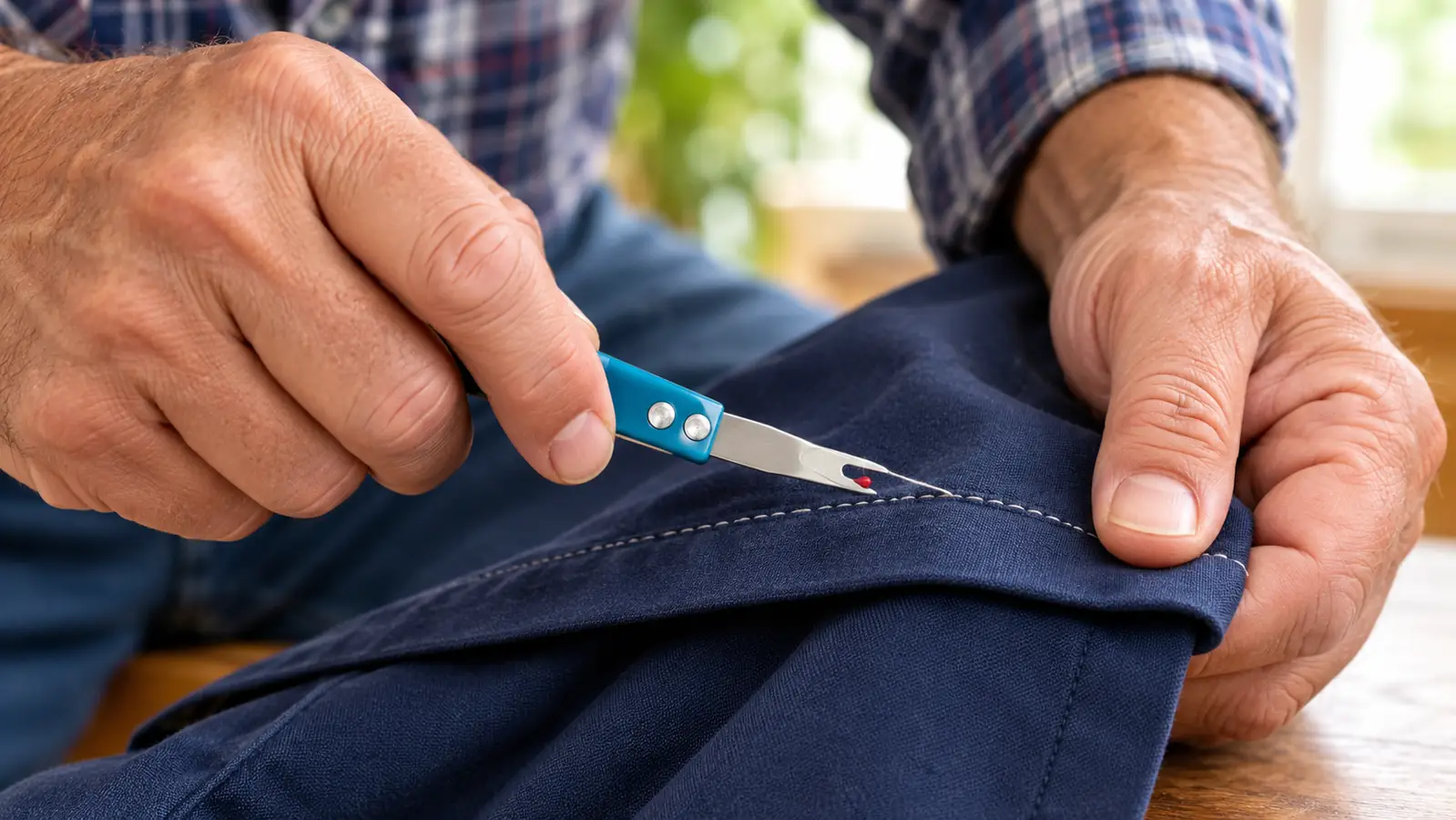
The first job was a pair of trousers for a neighbor, a hem that had been let down and put back up badly, with a row of tiny machine stitches sitting right on the fold. I used the small ripper, the 3.5 inch one, because the short handle puts my hand close to the work and I can see the tip against the thread. There is a knack to it. You slide the point under a stitch, let the ball tip ride the fabric, and lift. Four minutes and the whole hem was open with no mark on the cloth.
The second job was a quilt block I had sewn with the wrong seam allowance, which meant a long straight run of stitches through quilting cotton, roughly eighteen inches of them. That is a different motion. The 5.5 inch ripper handled it better because there is more handle to hold and the longer point slides under a run of stitches so you can lift several at once instead of stabbing at each one. I had the block apart in about six minutes and re-sewed it that afternoon.
The third job told me the most. I set a bodice in crooked on a dress for myself, unpicked it, re-pinned, set it again, and got it wrong a second time. Two rounds of that in one evening comes to maybe ninety minutes of unpicking. My right thumb was tired at the end of it, but it was not angry, and that is not something I could say about the thin ripper in the accessory tray.
What Comes in the Kit
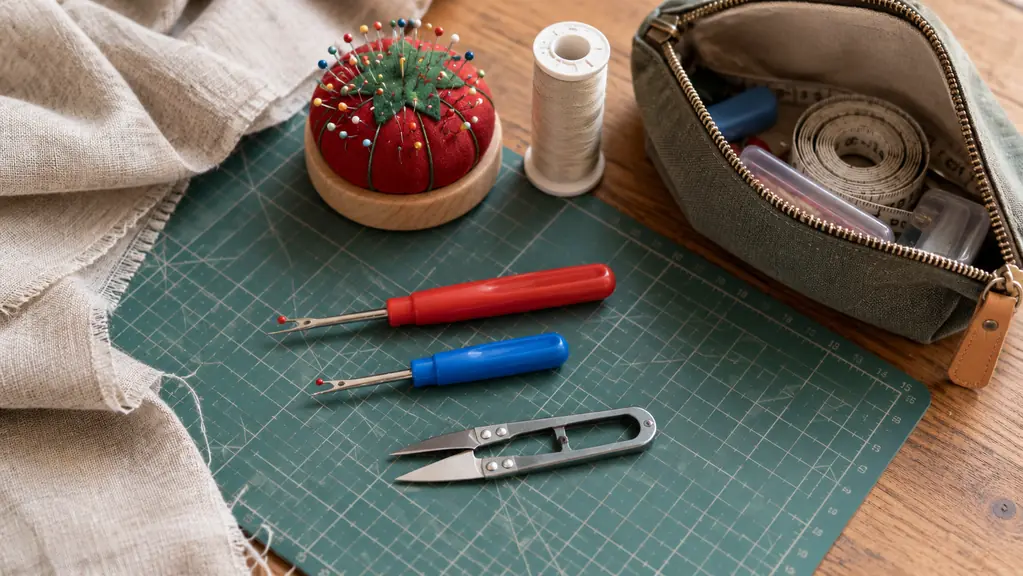
The CampTek set is four plastic handled seam rippers, two large and two small. The small ones measure 3.5 inches long and the large ones 5.5 inches, so there is a real difference in the hand and not just a different look on a label. The metal is stainless steel and the handles are plastic, which is what you want for something you will be gripping for ten minutes at a stretch.
The small rippers come with a clear plastic cap. That detail matters more than it sounds. A loose point in a hand sewing tin is how you find it with your fingertip, and I have done that twice in fifty years and do not care to do it again. The cap also means I can drop the small ripper into the storage bag without worrying that the point will catch on the nipper.
You also get one sewing trimming scissor nipper, the little spring loaded kind for snipping thread tails, and one small storage bag. The whole set weighs 2.88 ounces, so it is nothing to carry and nothing to store. The bag is what has kept the five pieces together in a drawer instead of scattered across the cutting table, the machine drawer and the tin, which is what happened to my old ripper.
The Big One and the Small One
Here is the practical difference, and it took me a month to work out which I reach for when. The 3.5 inch ripper is for control. When you are opening a seam in a fine fabric, or picking out a stitch that sits on a fold, you want your fingers close to the blade and you want to see exactly where the point is going. The short handle gives you both at once, and you can feel the stitch pop rather than guess at it.
The 5.5 inch ripper is for distance and leverage. Long runs of stitching, heavier fabric, a quilt seam sewn at the wrong width, a waistband you have to take off in one piece. You hold it further back and the length of the handle gives you a steadier stroke down the line. My habit now is to start a long seam with the big one and switch to the small one when I get near a corner or a curve.
Having two of each matters more than I expected. One small ripper lives in the hand sewing tin and one stays on the cutting table. The two large ones sit in the storage bag and in the drawer by the machine. I am not hunting for a tool in the middle of a project any more, and that has cut down how often I leave a seam half picked and walk away from it until the next day.
What It Does for Hands That Ache
I have mild arthritis in my right thumb. It is not crippling, but it makes itself known after a long session, and it has changed what I look for in any small tool. A thin metal handle, which is what most sewing machines ship with, has to be pinched between finger and thumb. A plastic handle with some width to it can be held rather than pinched, and that is the difference between finishing a hem at eight o'clock and quitting at seven.
The CampTek handles are not padded and they are not moulded to a shape. They are plain plastic with a flat profile. What they give me is enough surface that my thumb rests along the top of the handle instead of clamping the side of it. On a four minute job I do not notice the difference. On a forty minute job I notice a great deal, and the day after I notice even more.
The cap is a small kindness in the same direction. Capping the ripper between uses means I am not fiddling with a bare point while my hands are stiff, and I am not reaching into a bag looking for the handle end by feel.
How I Keep the Set Together
Five pieces in a bag will separate unless you decide where each one lives. What works for me is this. The capped 3.5 inch ripper goes in the hand sewing tin. The uncapped small one sits in a jam jar on the cutting table with the marking pencils. One large ripper stays in the machine drawer and the second goes in the storage bag with the nipper, and the bag lives in the top left drawer where I can see it the moment I open it.
Cleaning is nothing. A wipe with a dry cloth and a look at the point. If you have been unpicking a lot of poly thread you may get a little fuzz caught at the base of the blade, and a pin will lift it out. I have not had a point bend or dull in four months of steady use, and my old ripper was blunt inside a year of the same work.
What I Compared It Against
Before this I used a single metal seam ripper that came with the machine and a heavier one I bought at a quilt show years ago. The metal one is fine for a stitch or two and miserable for a whole seam, because the shaft is thin and the point is short. The heavier one is a good tool, but there is only one of it, in one size, and I was forever carrying it from room to room and then losing it under a pile of fabric.
The nearest thing to a fair fight is the Singer Comfort Grip seam ripper, which is a single tool with a thicker handle. If you unpick one hem a month, a single good ripper is enough and you do not need a kit at all. I have written the full side by side of those two and it is linked below, but the short version is this: one tool with a nicer handle against four tools in two sizes and a bag.
For me the kit wins on the two things that actually cost me time, which are finding the tool and having the right size for the job in front of me. It loses on finish. A single moulded grip feels better in the hand than a plain plastic handle, and I will not pretend otherwise to make a review read tidier.
The Parts I Don't Love
The plastic on the CampTek rippers is ordinary. It is not soft touch and it is not textured, and if my hands are damp from standing at the iron the handle can get a little slick. I keep a scrap of cotton by the ironing board and dry my hands, which is a habit I should have had anyway, and it solves the problem. But it is a plain handle, not a comfortable one, and I want to be straight about that up front.
The trimming nipper is the weakest piece in the bag. It is small, it does the job on thread tails, and mine has been fine for four months. But it is not a substitute for a decent pair of snips and it is not meant to be. I treat it as a spare that lives in the bag so there is always something to cut thread with, not as my main cutter at the machine.
And the bag is a bag. It is not a case with dividers or elastic loops. If you want the pieces organised you will end up doing what I did, which is keep the capped small ripper in the tin and use the bag for the rest. That is a small complaint about a modest set, and I would rather tell you than have you buy it expecting a fitted case that is not there.
What I Liked
- Two sizes and two of each, so there is a ripper within reach in each room I sew in
- The 3.5 inch ripper gives real control on fine fabric and stitches sitting on a fold
- Clear plastic cap on the small rippers keeps the point away from your fingertips
- Plain plastic handle is wide enough to hold rather than pinch, which helps a sore thumb
- Trimming nipper and storage bag included, and the whole set weighs 2.88 ounces
Where It Falls Short
- Handle is plain plastic with no texture and can get slick when hands are damp
- Trimming nipper is a spare, not a replacement for real thread snips
- Bag has no dividers, so the small pieces still rattle around together
Two rounds of unpicking a bodice seam in one evening and my thumb was tired but not angry. That is the whole test for a tool like this.
Who This Is For
This is for the home sewist who does a lot of unpicking and is tired of doing it with a thin metal ripper. If you take in alterations, if you quilt and occasionally sew a seam at the wrong width, if you sew with grandchildren and end up fixing their work, you will use the small ripper constantly and the big one often enough to justify having it. It is also a sensible buy for anyone whose hands are not what they were, since the width of the handle lets you hold the tool instead of pinching it, and the cap means less fumbling when your fingers are stiff.
Who Should Skip It
If you unpick three seams a year, you do not need four rippers and a bag. One decent ripper with a comfortable handle will serve you and take up less room in the drawer. Skip it too if you want a fitted case with dividers, or if you expect the trimming nipper to replace your thread snips, because it will not. And if your only complaint with your current ripper is that the blade is dull, a new one in the same thin shape will not fix that. This set is easier on the hand, not a sharper tool.
Four months in, the small ripper is the piece I would replace first
Two sizes, four handles, a cap on the small ones, and a bag that keeps the set together instead of scattering it across three drawers. If you unpick more than you would like to admit, this is worth a proper look.
Amazon Check Today's Price on Amazon →