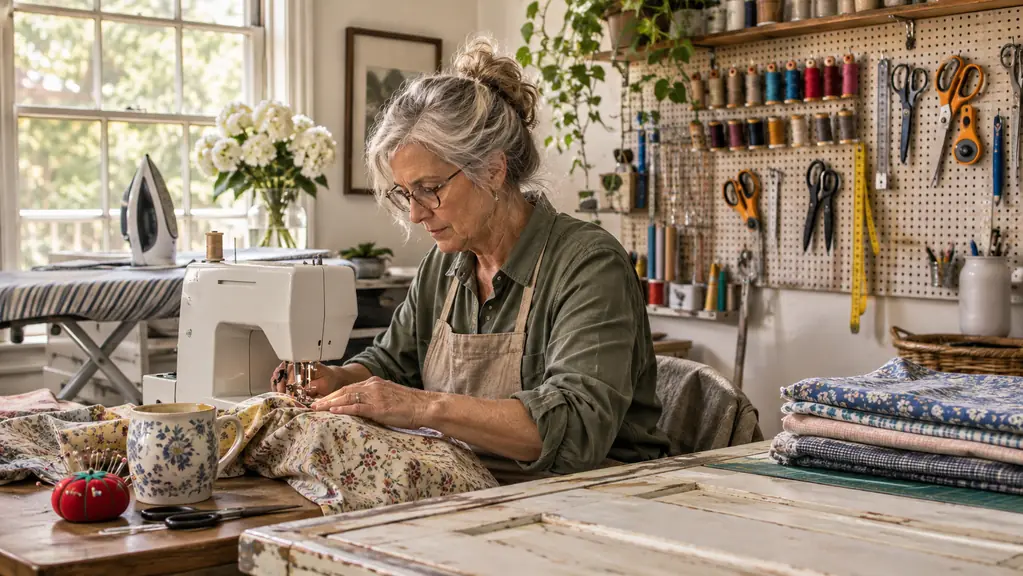
You know the sound. The needle drops, the feed dogs pull, and about four stitches in you feel it in your shoulders. That seam is wrong. Maybe the tension drifted. Maybe you caught the back of the hem into the front. Maybe you looked away because Pockets had just settled onto the fabric you were about to sew. Either way those stitches have to come out, and they have to come out without taking the cloth with them.
That is the whole job of a seam ripper, and it is why I keep one within arm's reach of the machine. I ran a small alterations counter in the back of a dry cleaner for twenty-two years, and I wore out more rippers than I did needles. These days the set that lives beside my machine is the CampTek seam ripper and thread remover kit. Five pieces, one small bag, and a spot on my pegboard I do not lend out.
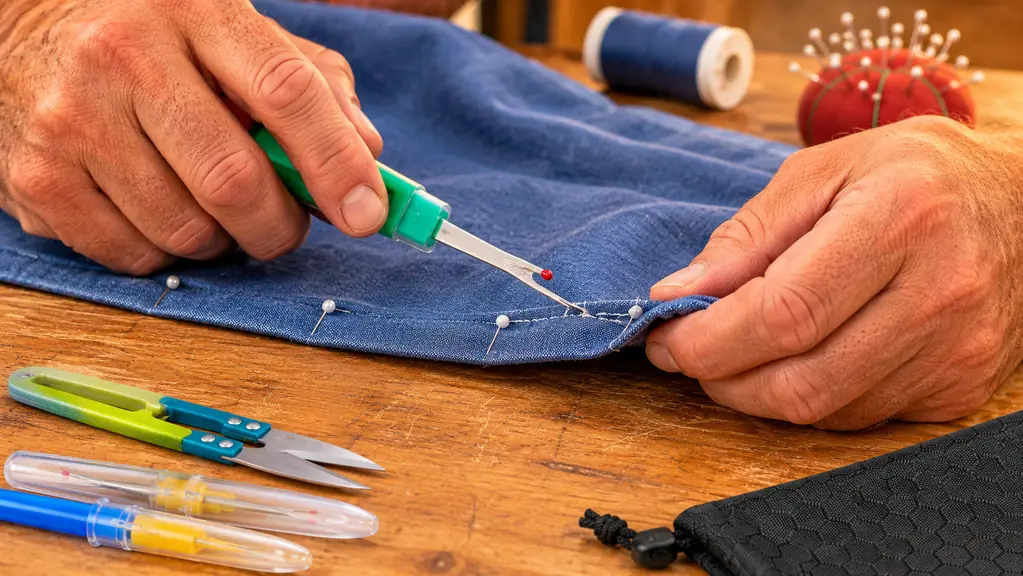
Most people unpick with whatever is nearest. A pair of embroidery scissors. A straight pin. A ripper with a point so blunt it pushes the thread around instead of catching it. I once watched a customer work a hem apart with her fingernail because the ripper in her drawer was too big to get under a fine stitch. That is not a fabric problem or a skill problem. It is the wrong tool at the wrong size, and it turns a two-minute correction into twenty.
The CampTek kit answers that by giving you both sizes. Two large rippers at 5.5 inches for trouser hems, waistbands, and anything sewn with a sturdy thread. Two small ones at 3.5 inches for fine work, the stitching that sits close to an edge where a long point has no room to move. The small thread remover comes with a clear plastic cap, and that is the piece I take to the tiny backstitch at the top of a zipper. A scissor-style thread nipper comes in the set too, and the whole thing weighs 2.88 ounces and lives in its own small storage bag.
The plastic handles matter more to me now than they used to. I have arthritis in my right thumb, and a thin metal handle turns a simple unpick into a hand cramp by the third seam. These are light and wide enough to hold without pinching. The points are stainless steel and fine enough to slide under a stitch without cutting the fabric beneath. Light pressure, a small lift, and the thread gives.
I wore out more rippers than I did needles in twenty-two years at that counter.
The tool you reach for most should be the easiest one to grab
Four plastic-handle rippers in two sizes, a thread nipper, and a small bag to keep them together. Mine hang on the pegboard by the machine, and the 8,500-plus ratings suggest I am not the only one who keeps them close.
Amazon Check Today's Price on Amazon →The large ripper does the heavy lifting. I keep one on the pegboard and one in the bag, and the bag travels with me when a neighbor asks me to look at a hem. On a wool trouser hem sewn with a machine stitch, the longer handle gives you the reach to work in one steady motion instead of picking away at it. Stitch by stitch the whole hem opens in a few minutes, and the fabric underneath comes out untouched.
The nipper gets used more than I expected. It is the piece for thread tails, for clipping a seam allowance after you have graded it, for the last half inch of a serger chain. Between the rippers and that nipper, I have stopped reaching for my good shears to cut thread, which is the fastest way there is to dull a pair of shears. That alone earned the kit its hook.
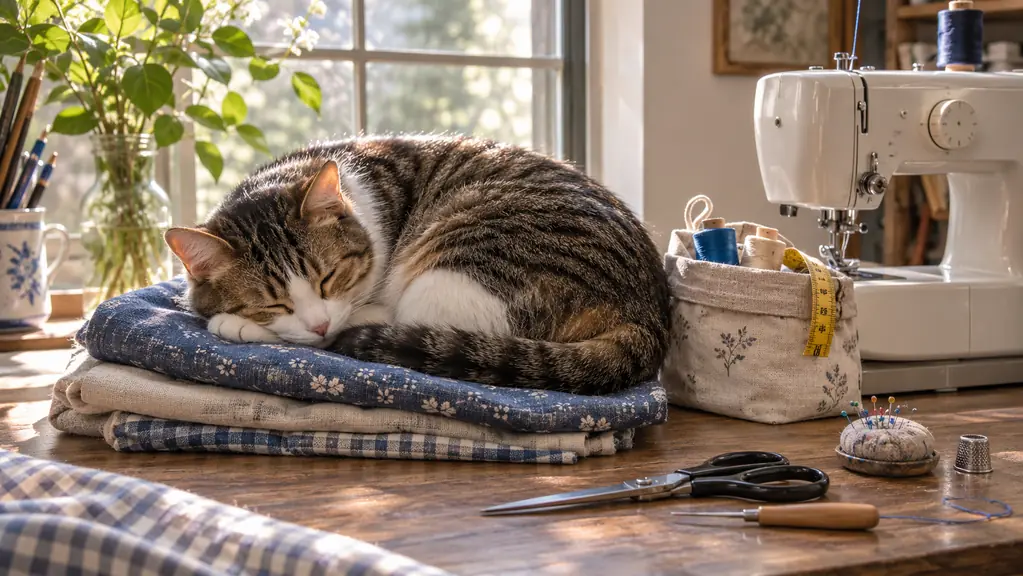
Here is what the kit will not do. The points are fine, and fine points bend if you pry with them. Use a lift, not a lever. The caps are small and one of mine went missing inside a month, so the set stays in the bag rather than loose in a drawer. And four rippers means four chances to leave one on the ironing board where Pockets will find it, which is exactly why the bag earns its keep in a house with a cat who sleeps on whatever fabric is laid out.
What I'd Tell You If We Were Sitting at My Kitchen Table
Buy the set, not the single ripper. The one by the register is one size, and one size is wrong about half the time. Take the small one to the fine work and the big one to the heavy seams, and stop forcing one point to do both jobs badly. Keep the bag. Hang a ripper where you can reach it without standing up, because the tool you have to hunt for is the tool you will not use, and you will go back to the scissors and ruin them.
And please stop unpicking seams with your shears to save a trip across the room. I have seen more good scissors ruined that way than any other. The CampTek set does more for your shears than a re-sharpen will. That is the whole case for it, from a woman who has sat at the machine for fifty years and no longer gets excited about gadgets, except on the rare occasion when one of them simply works.
One small bag, five pieces, no more hunting through the pin tin
Two large rippers, two small ones with a capped fine point, a thread nipper, and a storage bag. If you unpick more than one seam a month, keep the set where you actually sew.
Amazon Check Today's Price on Amazon →