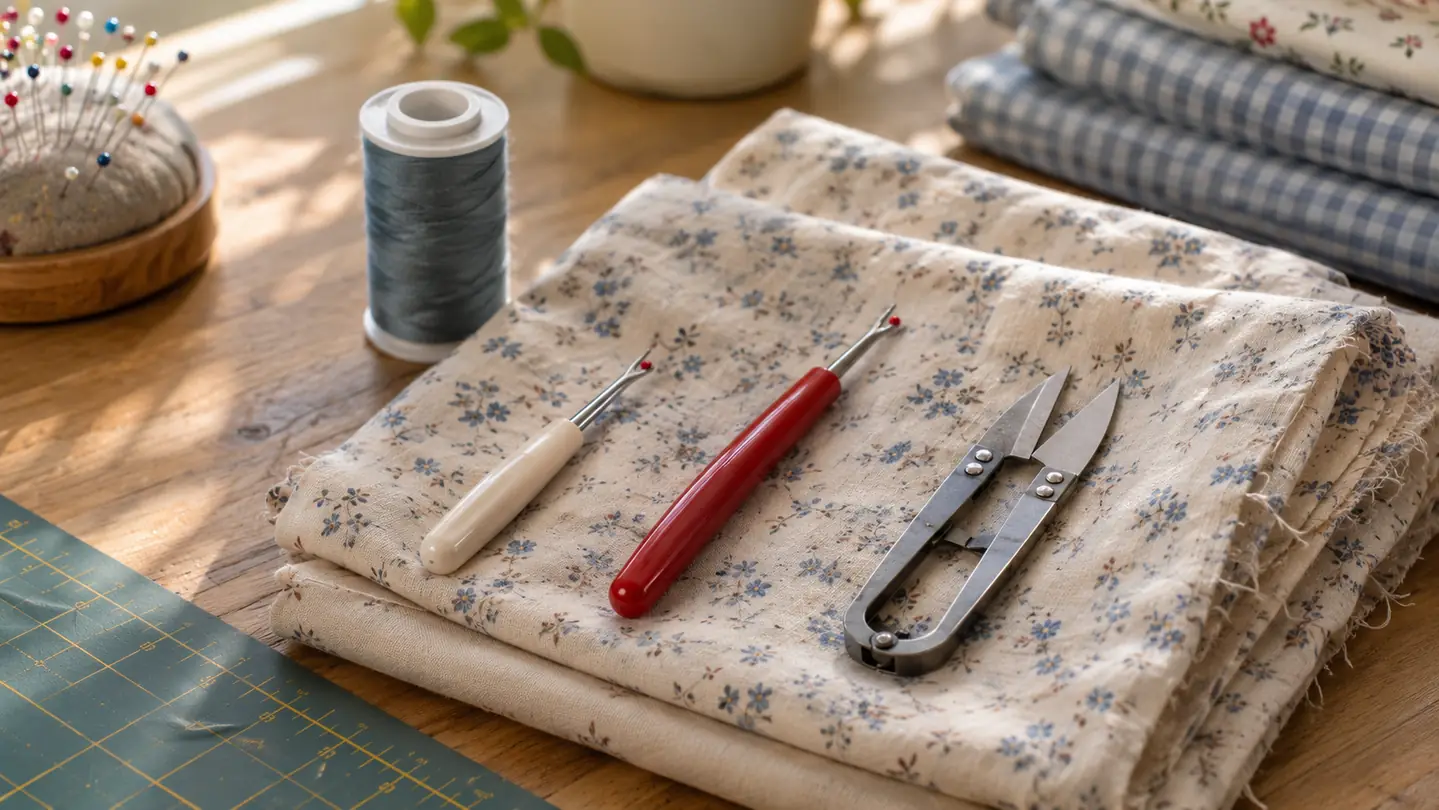
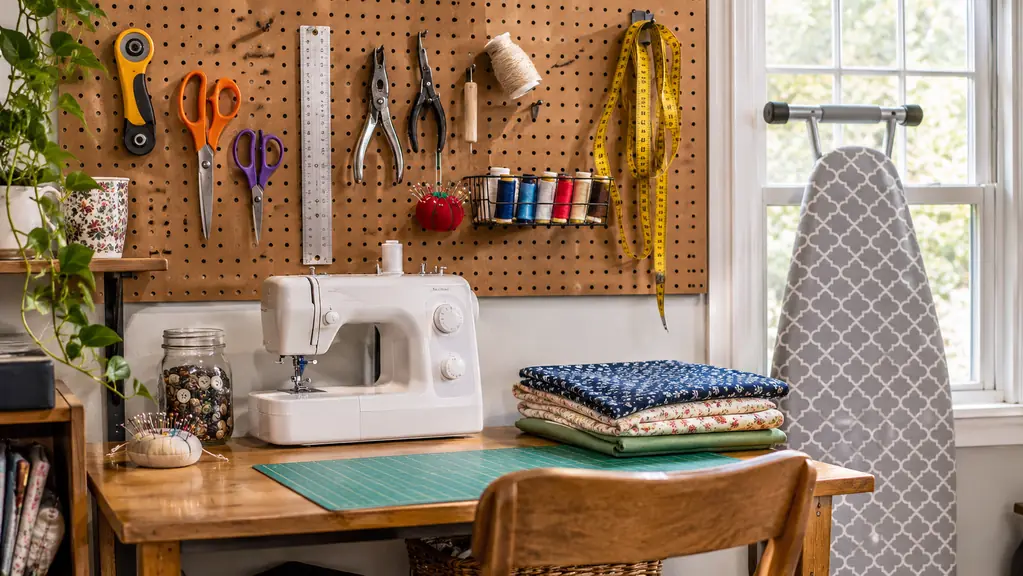
Every seam I have ever picked out has taught me the same thing. The tool matters more than the patience. I have sat at my cutting table, an old door my late husband turned into a worktop, and picked at a bad stitch with the little ripper that came in the accessory box with a machine. Twenty minutes later the fabric had a pulled thread and my right thumb ached. That is not a sewing problem. That is a tool problem. The CampTek seam ripper and thread remover kit now hangs on the pegboard above that table, and it is the set I reach for without looking. I ran an alterations counter for twenty two years and I still mend for neighbors most weeks, so a ripper is not a novelty to me. It is the working tool that gets picked up on a Tuesday afternoon when a hem has gone crooked.
What follows are ten reasons it earns that peg. Each one is a small thing on its own. Small things are what separate a job you enjoy from a job you fight.
The set that stops a pulled thread before it starts
Four rippers in two sizes, a trimming nipper, and a bag to keep the lot together. Mine lives on the pegboard by the machine.
Amazon See the CampTek kit on Amazon →Two sizes stop you forcing one blade into every job
The smaller ripper in the CampTek kit is 3.5 inches long and the larger is 5.5 inches, and that gap is the whole reason the set works. The long handle gives you reach and leverage on a waistband or a jeans hem, where the seam is thick and the stitches sit deep. The short one lets you work close to the needle plate without your knuckles crowding the fabric. For years I used one medium ripper for everything, which meant fighting a heavy hem with a tool built for a pillowcase. Nobody teaches you that. You just notice your hand hurts.
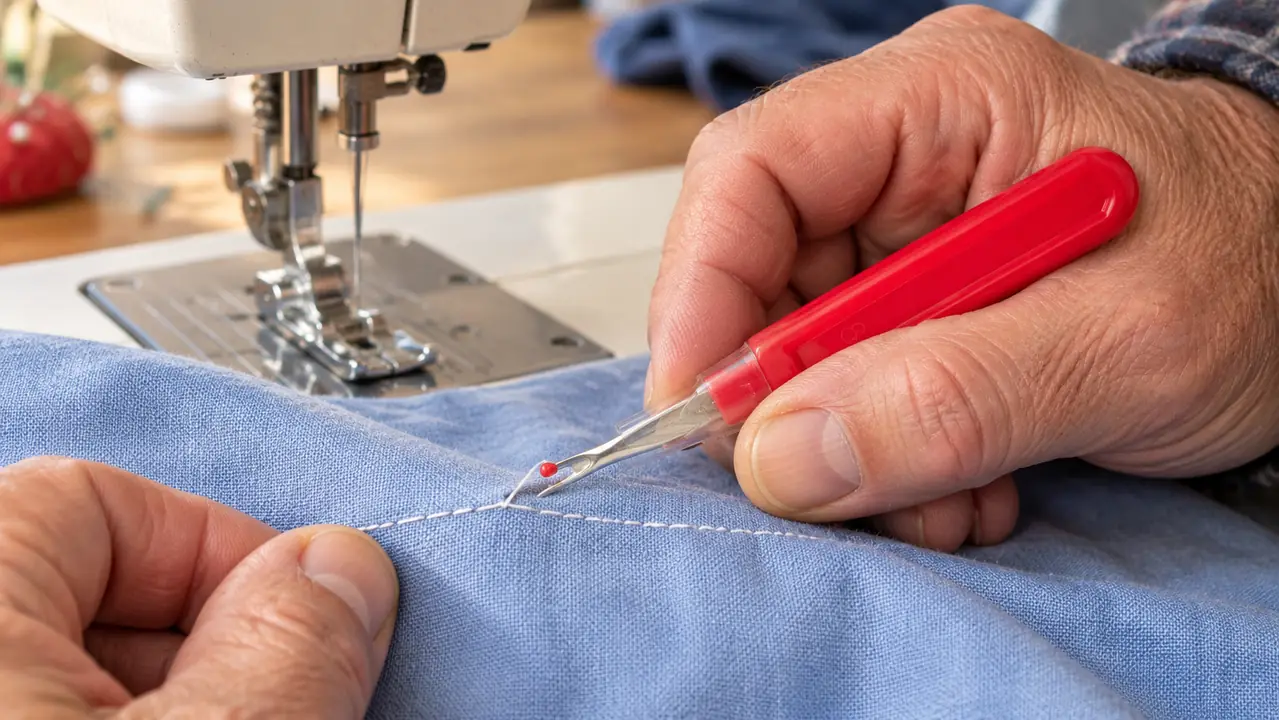
The small ripper slips under fine stitching without gouging the weave
Fine work is where a dull point does real damage. On a serged edge or the tiny backstitch at the start of a seam, the point has to get under the thread without catching a warp end. The small thread remover in this set is shaped to get into those small places. I use it point up, in short strokes, lifting one stitch at a time. Slow is faster here. I have pulled a run in a cotton poplin with a bad ripper, and I have not done it with this one.
The handle gives an arthritic thumb something to hold onto
My right thumb has mild arthritis, and by four in the afternoon it tells me about it. A thin metal ripper with a finger rest is fine for ten stitches and miserable by fifty. The plastic handles on these rippers are long enough for a full hand rather than two fingertips, so the pressure spreads across the pad of the thumb instead of one joint. On days when my hand is bad I choose the 5.5 inch ripper even for small jobs, purely for the grip. That is not a small consideration when your hands are the engine.
Four rippers mean one is always where you are standing
The kit contains four plastic handled seam rippers, so the set can live in more than one place. Mine are split: one at the machine, one by the ironing board, one in the drawer with the hand needles, and one in the bag for when I carry mending to my daughter's house. Before this I owned exactly one good ripper and I spent part of every project looking for it. Chasing a tool around a room is not sewing. It is housework with extra steps.
The trimming nipper reaches the closed-in places a ripper cannot
The sewing trimming scissor nipper is the piece I did not expect to use every day. It is the tool for the last quarter inch, the top of a buttonhole, the point of a collar where the seam allowance is tight and a ripper simply will not fit. Snip, then pull. I also use it to clear the thread chain at the start of a seam before I press it open. It has a sharp little bite, so keep it to the thread and away from the body of the fabric.
The caps keep the points off your fingers and off the cloth
The small thread remover comes with a plastic cap, and I used to think that was packaging. It is not. A ripper left uncovered in a drawer rolls, and a point that finds the inside of your finger at nine at night ends the evening. The cap also keeps the point from snagging the silk you have just laid out flat. I put it back on the moment I finish, which is a habit that took about a week to form and has already saved me two garments.
The stainless steel point survives fusible interfacing and old glue
The working parts are stainless steel and the handles are plastic, which is the right split. A cheap point dulls the first time it meets the residue of fusible interfacing, or the old adhesive on a hem that has been pressed and pressed again. Once the point rounds off, the ripper stops sliding under the thread and starts pushing it. I have had this set long enough to stop thinking about it, which is the highest thing I can say about a small tool.
The bag keeps the set a set instead of a scatter
Everything comes in a storage bag, and that bag is why the kit is still a kit. Loose rippers migrate to the bottom of a sewing box, hide under pattern paper, and turn up weeks later behind the iron. The bag hangs on a peg, so the set is one motion away and one motion back. My cat Pockets will sleep on any fabric left flat for more than a minute, and a closed bag is one less surface for him to claim as a bed.
Under three ounces means it travels with you
The whole set weighs 2.88 ounces. That is light enough to go into a handbag with a folding hem project and never be noticed until you need it. I take mending to my daughter's kitchen table and I take the bag, because doing a hem with a pair of nail scissors is an hour I will not get back. When you travel with sewing, the tools you pack are the ones you genuinely use at home. Nothing else makes the bag.
You are never stopped mid-project when a point goes dull
Any ripper can be replaced, but a set means losing one is an inconvenience rather than a full stop. If a point dulls on a heavy canvas seam, there is another in the drawer the right size for the job. That spare is the quiet value of buying a set instead of a single tool. Projects stall over small things, and running out of the right ripper at the wrong moment is one of them.
What I'd Skip
Let me be plain about what this kit will not do. It will not make an unpicking job quick when the stitches are tiny and the fabric is delicate. That is slow work no matter what you hold in your hand. The plastic handles feel light, and they will not suit someone who wants a weighted metal tool, and the caps are easy to misplace if you are the sort who sets things down mid-task. If you sew once a month and already own three old rippers that still have points, you likely do not need this set. If your ripper is the free one that came in the machine box, replace it. That is the honest line, and I would say the same at my own kitchen table.
A ripper that fits your hand turns a forty minute mistake into a four minute one.
A tool you stop thinking about is a tool doing its job
The CampTek set: four rippers in two sizes, a trimming nipper, and a storage bag for the lot.
Amazon See the CampTek kit on Amazon →