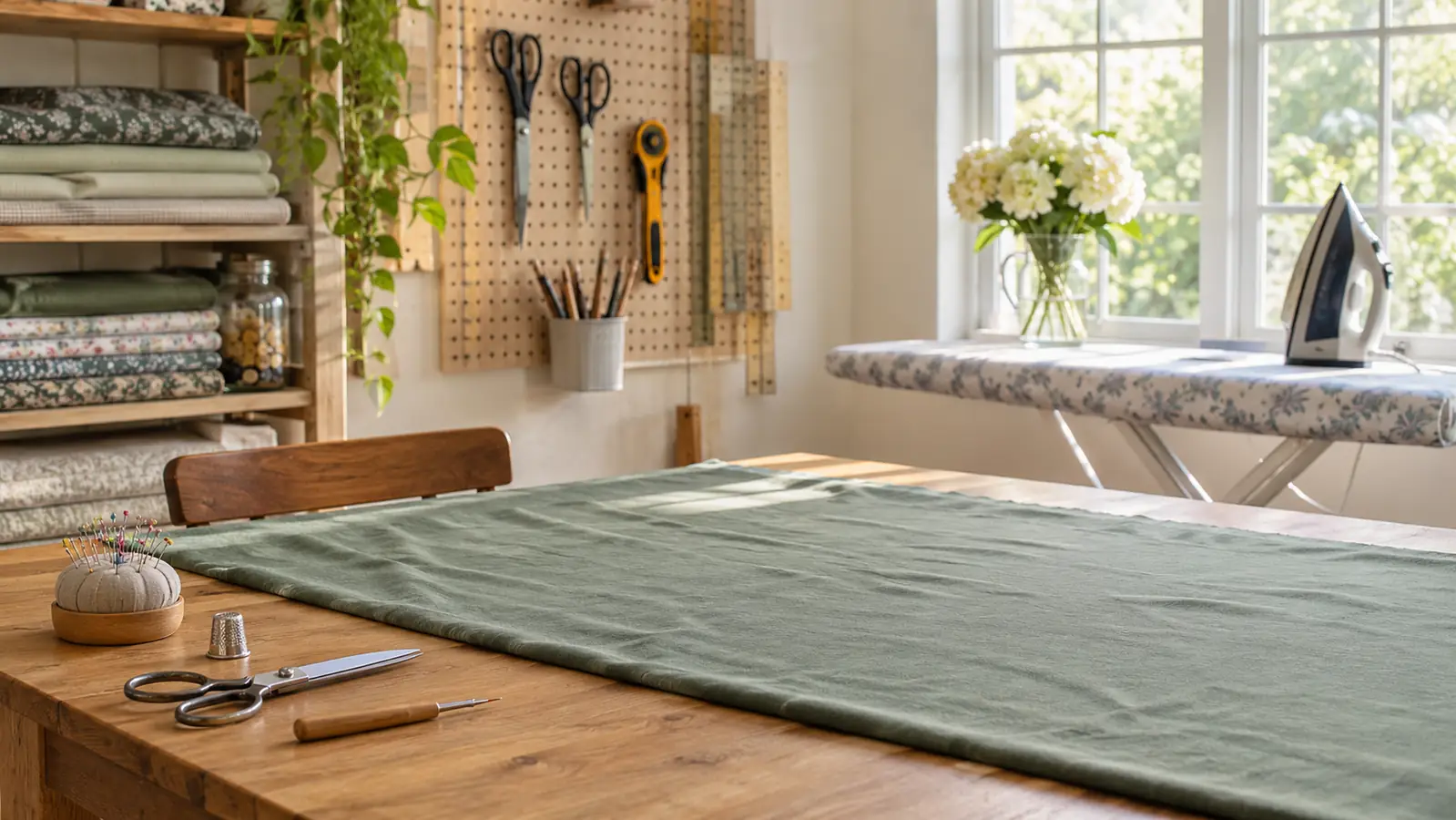
The tool I reach for more often than my sewing machine is the one that undoes my mistakes. A seam ripper. I have owned one since the early seventies, and for most of those years I bought whatever sat in the bin beside the register at the fabric shop, used it until the point went dull, and dropped it in the wastebasket without a second thought. When the CampTek kit arrived on my cutting table, four rippers and a nipper in one small bag, I expected the same story with nicer wrapping.
Two months of daily use later, I have a better answer than that. The kit has earned its spot on my pegboard, and I will tell you exactly why. It also has two real drawbacks, one of which will matter a great deal if your hands are anything like mine at seventy-four. That is the honest version of this review, not the five star version with a photograph of the box.
The Quick Verdict
Four rippers that genuinely split the work by size and a nipper that earns its keep, held back by slim plastic handles that punish arthritic thumbs and a three and a half inch size that nearly disappears in a large hand.
Amazon Check Today's Price →Four Rippers and a Nipper, Tested at My Own Table for Two Months
The size split is the part that holds up. Two at five and a half inches for hems and bindings, two at three and a half for buttonholes and armholes, plus a nipper for thread. Mine lives on the pegboard now.
Amazon Check Today's Price on Amazon →What Is Actually in the Bag
Four seam rippers with plastic handles. Two are five and a half inches long, two are three and a half inches long. Add one sewing trimming scissor nipper for thread, and one storage bag. The whole kit weighs just under three ounces, which is the sort of number you ignore until you have carried a single long ripper loose in a tote for twenty years and put a hole in the lining.
The listing calls the set multifunction, a word that tells you nothing until the thing is in your hand. What it means in practice is that the two lengths are meant for two different jobs, and the bag is meant to keep all of it in one place. On that second point, the small rippers come with a clear plastic cap over the point, so they can go into the pouch without spearing through it on the way.
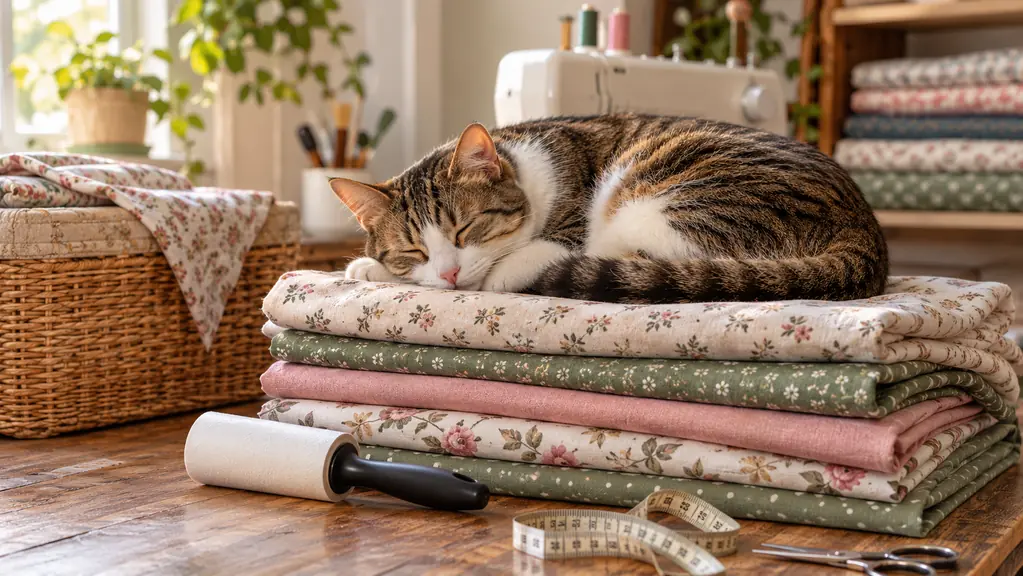
Here is the first thing most reviews leave out. The bag is not a freebie. It is the reason the kit works at all. I have lost more seam rippers than I have ever worn out, because a single loose one migrates from the machine to the ironing board to the bottom of a project bag and is then simply gone forever. Four rippers in one pouch means I always know how many I have. My cat Pockets has never knocked the pouch off the table, although she has made a serious attempt on the fabric lying beside it, which is the usual state of affairs in this room.
How I've Used It
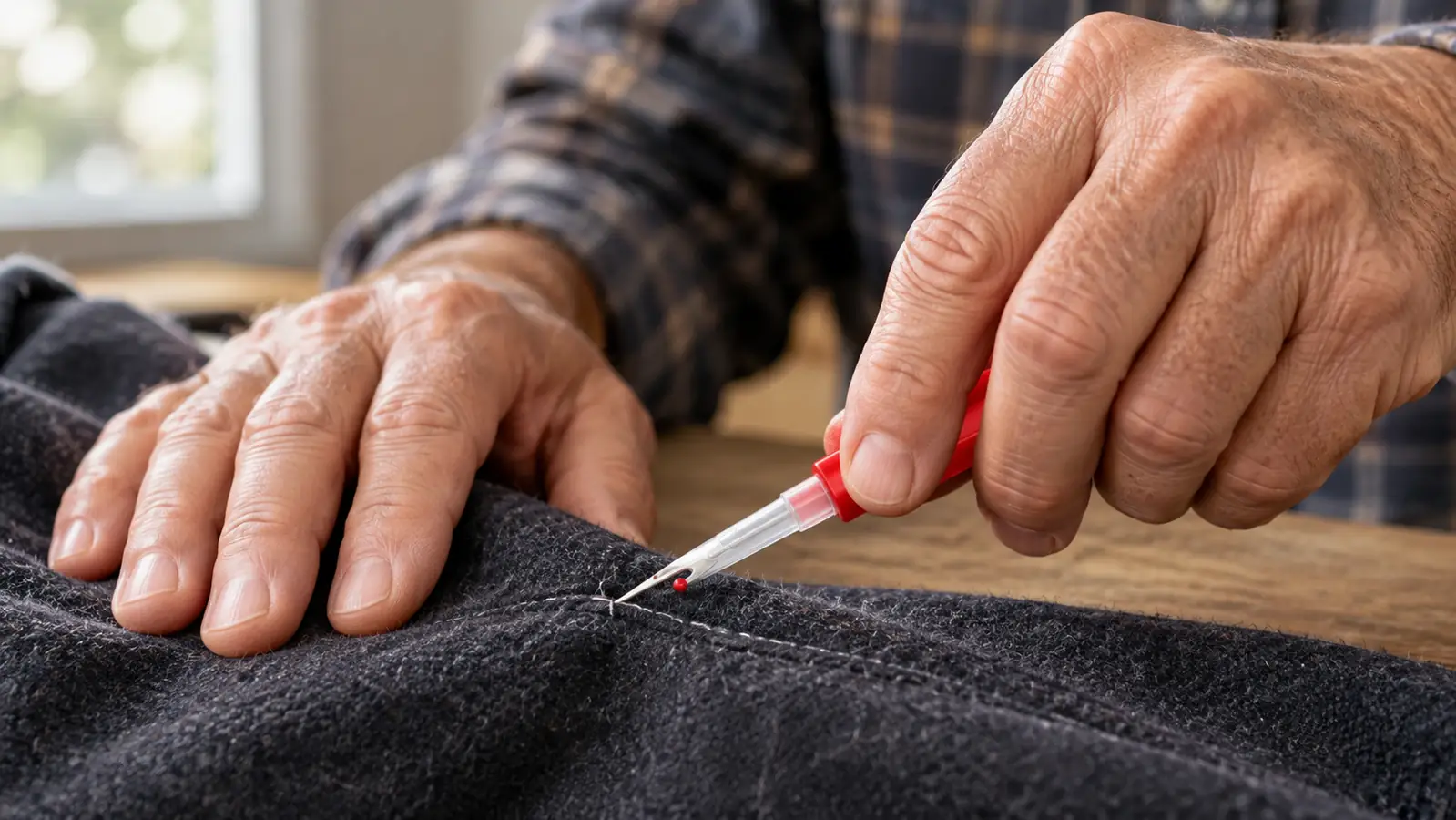
The job that convinced me was a lined wool trouser hem for a neighbor. I had sewn forty inches of it at three eighths instead of five eighths, which is the sort of mistake you only notice once the lining is already in and the whole thing has been pressed. Out came the five and a half inch ripper.
You slide the point under a stitch, rock it forward, and let the cutting edge open the seam as you go. The trick is not to pull. Pulling stretches wool and leaves a row of pinholes that no amount of steam will close again. The CampTek point is fine enough to slip beneath a stitch without catching the fibres underneath it, and that is the whole game with a ripper. Forty inches came out in about ten minutes, and not one thread of that wool went with it.
The second job was a quilt binding I had stitched through in two places on the wrong side, the kind of thing that happens when you are talking on the phone while you sew. That one needed the short ripper, because the seam was only an inch from the edge and the long tool put my own knuckles between my eyes and the work. Small tool, two minutes, binding saved.
Two months on, the same long ripper is still catching as cleanly as it did on that first hem. The nipper has become the piece I did not expect to use daily. Thread tails at the end of a seam, the odd loose end on a binding, a stray chain of serger thread. It is faster than lifting the shears off the table, and it does not disturb a seam that is already correct as long as you are paying attention, which is the whole caveat with a nipper.
The Two Things Nobody Mentions
The first is the handle. Plastic, plain, and slim. For twenty minutes at the machine that is nothing at all. For an hour of unpicking, which is what a badly fitted muslin demands, it becomes a problem. I have mild arthritis in my right thumb, and by the end of a long session the joint is complaining and I have to switch to a fatter grip or stop for the afternoon and make a cup of tea instead. A thicker handle would fix this and cost the maker almost nothing. If your hands are strong, ignore me. If they are not, budget for the ache.
The second is the size of the small rippers. Three and a half inches is smaller in the hand than it sounds, and in mine it nearly disappears. They are excellent for fine work, buttonholes and the tight curve at an armhole, exactly as the listing claims. But they are too short to be comfortable for anything that takes more than a minute, so in my sewing room they live in the pouch as the emergency set rather than on the pegboard. Half the kit is, in practice, spare. That is not a bad thing to own, but it is not what the four piece count implies.
The nipper deserves its own line, and this is the part I would want to know before ordering. It is a nipper, not a pair of shears, and it is not a tool I would put in a beginner's hand next to a seam that has to stay intact. Used for thread it is quick and tidy. Used absentmindedly near a seam that is already correct, it can do damage in a hurry, and unpicking is a slower business than clipping.
How the Two Lengths Really Divide the Work
The long ones, at five and a half inches, are for anything flat and long. Hems, side seams, quilt bindings, the seam on a pillow cover, anything where you want the handle clear of the fabric so you can actually see what the point is doing. That clearance is the reason for the length. A short tool puts your knuckles on the cloth and your eyes too close to the stitch, and you end up unpicking by feel, which is how fabric gets cut.
The short ones, at three and a half inches, are for anything curved or confined. Buttonholes, the top of a zip, the armhole of a child's dress, the last half inch at the end of a seam where the machine decided to bunch up. In those places the long ripper is a nuisance because you cannot see past your own hand, and the fine point on the short one gets into stitching the big one cannot reach.
Where the split breaks down is anywhere on a small circumference, like a sleeve, where the long tool is unwieldy and the short one is slow. That is not a fault of this kit so much as a fact of seam ripping in general. Sometimes you want a middle length, and nobody sells a middle length.
What Two Months Does to the Point
The cutting parts are stainless steel, and I press with steam right beside them, so this was the thing I watched for. No rust spots. No staining. No marks left on pale cotton after the tool sat damp on the table overnight, which I would rather not admit to in print. A wipe on the apron and they are done.
Any ripper dulls eventually. Mine get used hard on old muslin and on seams that have been pressed twice, and the point will stop sliding under a tight stitch long before it stops cutting. When that happens, the long one will become the one that lives with the machine and I will open one of the spares. Having four in a kit means two more than I have ever owned at once, and that is a quiet sort of comfort for a woman who has bought the same tool forty times.
One piece of care worth knowing. Keep the plastic handles away from the iron. Not because they will melt at a touch, but because a hot soleplate left too close will take the edge off the shape in a way you cannot undo. Mine sit on the pegboard for exactly that reason, and not on the pressing cloth where I would naturally drop them.
How It Compares With the One-at-a-Time Rippers I Have Owned
For most of my working life I bought rippers one at a time off the notions wall and judged them by a single thing: whether the point slid under a stitch without tearing the cloth. Some did. Some had a point so blunt I was really just pushing thread around the seam and calling it unpicking. The CampTek tips are on the good side of that line, and they have stayed there through two months of use, which is the part I did not expect from a kit at this level.
Where the kit differs is not the tool. It is the quantity. Four rippers in one pouch changes how I work. There is one at the machine, one in the pouch that travels to the ironing board and out to the kitchen table, and two spare. I no longer stop in the middle of a seam to hunt for the tool, and that sounds trivial until you count how many times a day it happens. The interruptions are what make a long hem feel endless, not the sewing.
The heavier handled ripper I have owned for years is still a better grip than any of these four. It is also the only one of its kind in the house, so it lives wherever I last used it, and half the time that is not where I am standing. That trade, one better grip against four tools in known places, is the entire decision with this kit. I made it in favor of the kit and I would make it again.
What I Liked
- Four rippers in one pouch, so one lives at the machine, one travels, and two stay spare
- A true size split between five and a half inches and three and a half inches, not two near-identical tools
- Stainless steel points that showed no rust or staining in two months beside a steam iron
- Caps on the small rippers so they travel in the pouch without puncturing it
- The nipper handles thread tails faster than lifting the shears
- The whole kit weighs under three ounces, which matters in a project bag
Where It Falls Short
- Slim plastic handles that punish an arthritic thumb after twenty minutes of steady unpicking
- No cap on the long rippers, so the pouch is doing the work of protecting the point
- Three and a half inches is short in a large hand, so half the kit ends up as spares
- The nipper is not a beginner tool and can clip a good seam if you are careless
Forty inches of a hem I sewed at the wrong allowance came out in ten minutes, and not one thread of that wool went with it.
Who This Is For
If you sew a few times a month and you are tired of buying one ripper at a time, this kit solves a real problem. You get a long one at the machine, a short one in the project bag, and spares for the day one slides under the chair and is not seen again until you move the furniture. The size split is honest, the points hold up, and the pouch keeps the count honest. The CampTek kit has replaced a drawer of loose tools in my sewing room, and I did not expect to be able to say that.
It also suits anyone who unpicks at a table rather than in the hand, because the pouch makes the whole set portable in a way a single long ripper never is, and the caps on the small ones mean nothing gets stabbed on the way.
Who Should Skip It
If your hands ache, skip this and buy one ripper with a handle you can actually grip. One good fat-handled tool will serve you better than four slim ones, even if that single tool costs more than the whole kit does. I say that as someone who likes the kit and keeps it within reach.
Skip it too if you only ever unpick buttonholes and small curves. You will use the two short ones and wonder why you paid for the long ones, and the honest answer is that a single short ripper plus a pair of fine shears is a better shape of kit for that work. This set is built for someone who unpicks long straight seams as often as fiddly short ones.
The Kit Is Worth It. The Pouch Is What Keeps It Worth It.
Two long rippers, two short, a nipper and a bag, all of it under three ounces. Mine stays on the pegboard and the spare set lives in the pouch, which is the only reason I still know where all four went.
Amazon Check Today's Price on Amazon →