The first time I pressed a seam with a mini iron, I thought somebody had sold me a toy. I had spent twenty-two years behind an alterations counter with a full-size iron hissing at my elbow, and in all that time I never once wished it were smaller. Then my right thumb started stiffening up in the mornings, and lifting a regular iron off the board stopped being a nothing task.
So in the spring I bought the oliso M2Pro Mini Steam Iron, mostly to stop hauling the heavy one back and forth between the board by the window and the machine. Months later it sits on a folded towel within arm's reach, and the big iron comes out maybe twice a week for a full skirt or a set of curtain panels. This is what I have learned in that time, including the parts I do not love.
The Quick Verdict
Heats in about 45 seconds, sits in its own silicone rest, and presses seams as well as a full-size iron on everything short of heavy upholstery. The small reservoir means you refill it often.
Amazon Check Today's Price →The Iron That Earned a Permanent Spot Beside My Machine
Forty-five seconds to heat, an 8 foot pivot cord, and the Solemate rest included in the box. If your pressing happens in short bursts at the machine rather than long sessions at the board, this is the one I reach for.
Amazon Check Today's Price on Amazon →How I've Used It
My work is not glamorous. Neighbors bring me hems, a church group brings me quilt tops, and my grandchildren bring me whatever they have torn. That means a great deal of short pressing rather than one long session at the board. Press the seam, set it with the weight of the iron, move to the machine, sew, press again.
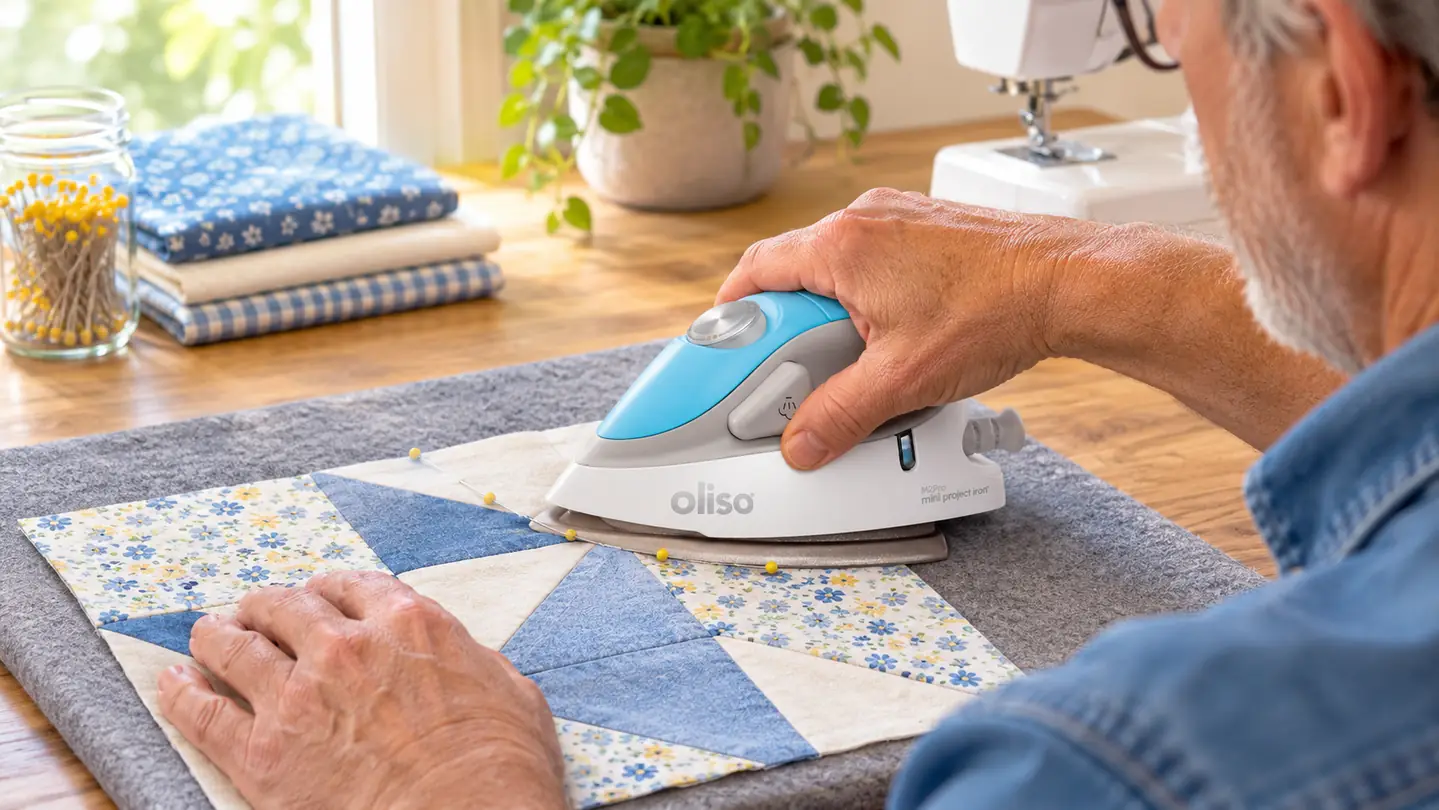
That rhythm is exactly where a mini iron earns its keep. The oliso heats up in about 45 seconds according to the listing, and I have not found that claim to be flattering. I turn it on when I sit down, thread the machine, and by the time the first seam is ready the soleplate is hot. With the big iron I would be standing there waiting, or worse, pressing too soon on a lukewarm plate and stretching the fabric I had just cut.
In the months since, it has pressed cotton quilt blocks, hemmed four pairs of uniform trousers for a neighbor, fused interfacing onto a bag panel, and opened more flat fell seams than I care to count. It has not scorched anything. It has not spat water onto silk. It has done the ordinary work of an iron, only closer to where I am sitting, which turns out to be most of the value.
Why Forty-Five Seconds Matters More Than It Sounds
Pressing as you go is the whole game in home sewing. You sew a seam, you press it flat, you press it open, then you sew the next one. If the iron is cold, you skip it. If the iron is across the room, you skip it. Skipped pressing is why a homemade garment looks homemade in the way nobody wants.
A tool that comes up to heat in 45 seconds removes the excuse. Mine sits within reach, so I press, then I sew, then I press again. The difference in my finished seams over these months is not subtle. Seams lie flatter, tops stitch together without fighting me, and I am not spending Saturday afternoon at the board catching up on a week of skipped pressing.
There is a second effect nobody warns you about. When the iron is small and close, you press things you would otherwise leave alone. Hems, pocket folds, the little curve at a neckline. Small improvements, dozens of them over a single garment, and they add up to something that hangs properly instead of almost hanging properly.
The Solemate Rest Is the Part I Did Not Expect to Care About
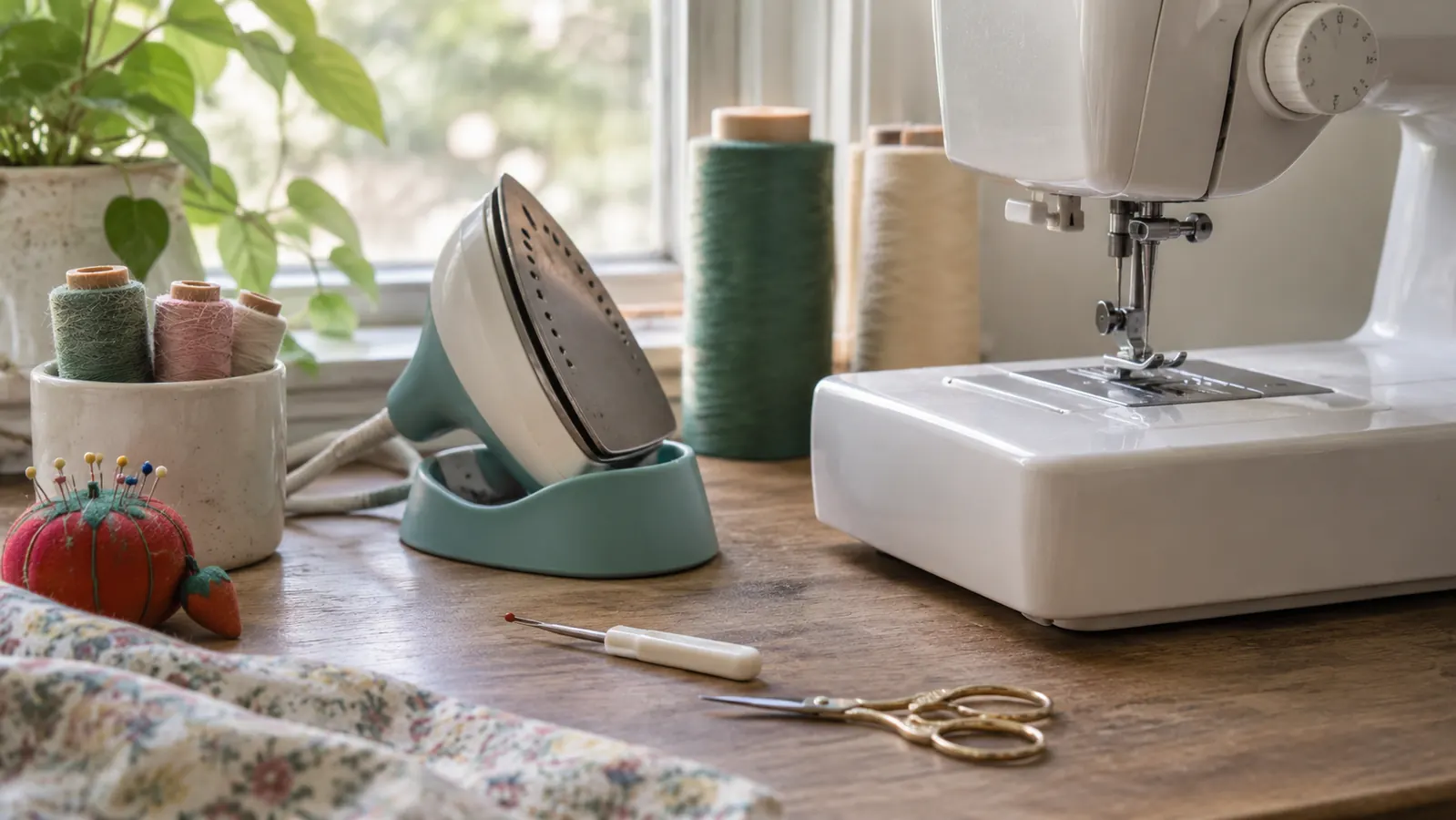
The M2Pro ships with a silicone rest oliso calls the Solemate, and it is included with every iron rather than sold as an extra. It is a small thing and it changed how I work in a room with limited flat surfaces.
On a full-size iron you set it on its heel and hope. With this one, the iron tips back into the silicone cradle and stays there with the soleplate facing away from the table. I move between the board and the machine a dozen times an hour, and I have stopped doing the mental check about where the hot thing is pointing.
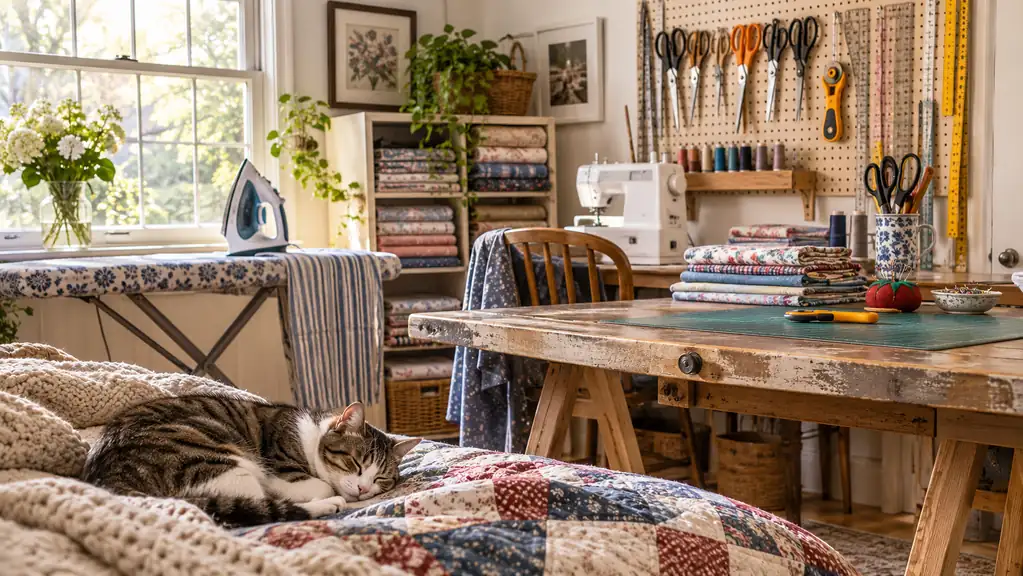
It also solved a problem I had not admitted to. My cutting table is my late husband's old door, and the finish on it is not what you would call precious, but I did not want to find out what a hot soleplate would do to it. The rest lives at the corner of the table and the iron goes there, every time, without me thinking about it.
Worth saying plainly: the listing does not promise an automatic shutoff, so I do not treat it as one. When I leave the room, I unplug it. That is not a complaint about the iron, it is how I handle a hot tool in a house with a cat who sleeps on whatever fabric is laid out.
Fabric Selector, Steam, and the Honest Limits
There is a fabric selector dial marked for synthetics, silk, wool and the rest, and it does what a heat dial should. The soleplate is diamond ceramic, and the heat across it comes up even, which matters most on the lower settings. A hot spot on a dark polyester is the difference between a pressed seam and a shine you cannot undo.
Steam is on demand and I use it sparingly. For wool I press through a cloth with a little steam. For quilting cotton I press dry almost always. The real tradeoff of a mini iron is water capacity. It is a small tool, so I refill it more often than I refilled the big one. That is not a design failure so much as physics, and I would still rather have the small size.
The 1000 watts matters more than the number suggests. It is enough to recover temperature after a burst of steam, which is exactly where cheap travel irons fall down. Mine has not stalled out halfway through a hem, and in months of use I have not once had to stop and wait for it to catch up to me.
Weight, Cord, and the Thumb Question
The iron is listed at 1 kg, a bit over two pounds, and it measures 10 inches long by 5 inches wide. That is light enough that I can pick it up with my right hand on a bad morning, which was the entire reason I went looking in the first place.
The cord is 8 feet and it pivots at the base. Eight feet sounds like a small detail until you have wrestled a stiff cord that drags your iron toward the edge of the board every time you turn a quilt. The pivot lets the cord swing instead of fight, and I notice it most on a big piece where I am turning the fabric constantly.
The grip is the part I would flag for anyone with hands like mine. It is a small handle, and my thumb sits on it more than it wraps around it. On a long session I notice that. It is not worse than a full-size iron and it is considerably lighter, but it is not a purpose-built ergonomic tool either. I take breaks, and I set it in the rest between passes.
The Soleplate After a Few Months
I expected the ceramic face to pick up interfacing residue and start dragging. It has stayed smooth. I wipe it warm with a dry cloth when I finish fusing, which is the same habit I have kept for thirty years, and I have not had to scrub it or use a Solemate-style cleaning bar on it.
The one mark on it is my own fault. I set it down on a scrap of fusible without looking and left a faint film that took two wipes to lift. Nothing has scored or chipped the surface, and the edges of the plate are still clean, which is where cheap irons usually start to go.
The 3 year manufacturer warranty is more than I expected on a tool this size. I have not needed it. I am noting it because it was part of why I chose this over the no-name travel irons on the same shelf.
Packing It for a Class
The M2Pro is dual voltage, 120 and 240, which means it travels. I have not taken it on a plane, but two women in my Saturday quilt group have, and both of them pack it instead of using whatever is in the classroom. At 1 kg it does not eat a suitcase.
The 8 foot cord is a genuine help in a classroom, where the outlets are never where you want them and everyone competes for the same strip. I have watched a woman across the table run an extension cord across the floor to reach her iron. Mine reached the wall on its own.
What It Will Not Do
It will not press a bedsheet. It will not take the wrinkles out of a lined wool coat in one pass. It will not stand in for a steam station when you are setting a full curtain panel. I keep the big iron for those jobs and I am glad I do, because a tool that tried to do everything would be heavier and I would not be able to lift it.
It will also not replace technique. If you are dragging the iron along a seam rather than lifting and setting it, you will still stretch the fabric, only faster. The iron rewards the person who already knows to press and lift, and it will not teach that.
Where it falls short for me is anything that needs sustained heat over a large area. A quilt sandwich is the obvious one. I baste, I press the top in sections, and I accept that it takes longer than it would at the board. If quilting large pieces is most of what you do, a mini iron is a companion, not a replacement.
What I Compared It To
Before I bought, I looked at the small irons sold for quilters and the cheap travel irons sold for suitcases. The travel ones were lighter and cheaper and I did not trust them, because a travel iron is built to press a shirt collar in a hotel room, not to hold a temperature through an afternoon of seams.
The quilter's irons I looked at were sold without a rest in most cases, which meant buying one separately and finding room for it on a table that is already full. The oliso came with the Solemate in the box, has a fabric selector rather than a single heat setting, and carries a 3 year manufacturer warranty. That combination is what decided it for me.
What I Liked
- Heats in about 45 seconds, so pressing actually happens between seams
- Solemate silicone rest included, which makes a hot iron safe to set down in a small space
- Even heat across a diamond ceramic soleplate with no scorching in months of use
- 8 foot pivot cord reaches both the machine and the board without dragging
- Dual voltage 120 and 240, and light enough at 1 kg to pack for a class
- 3 year manufacturer warranty
Where It Falls Short
- Small water reservoir means frequent refills when you steam
- Small handle tires a hand with arthritis on long sessions
- The listing does not promise an automatic shutoff, so you must unplug it yourself
- Not a substitute for a full-size iron on large pieces
- The wide soleplate is a help on seams and awkward inside a narrow tube
I turn it on, thread the machine, and by the time the first seam is ready the soleplate is hot.
Who This Is For
This is for the home sewist whose pressing happens in short bursts at the machine. If you make garments, quilts or bags and you find yourself skipping the press because the iron is cold or across the room, this fixes that in a way a bigger iron cannot. It is also for anyone whose hands have started to complain about lifting a heavy iron off a board, and for anyone who takes a class and needs something that fits in a bag and runs on 240 volts.
It suits a small sewing space too. My room is a spare bedroom with one cutting table and one board by the window. A second full-size iron would have nowhere to live. This one lives at the corner of the table and I do not have to put it away between projects, which means I actually use it.
Who Should Skip It
Skip it if your sewing is mostly large pieces. Curtain panels, bedsheets, whole quilt tops at the board, anything that needs sustained heat across a wide area. A full-size iron does that better, and you already own one.
Skip it as well if you need an iron with an automatic shutoff you can rely on, because the listing does not promise one. And if a small handle is a hard no for your hands, try one before you buy. That is the one part of this iron I would change and I cannot.
Small Iron, Pressed Seams, Fewer Excuses
If you have been pressing with whatever was already in the closet, the oliso M2Pro is worth a look. It heats in about 45 seconds, rests in its own silicone cradle, and it has held up to months of ordinary mending and quilting in my spare room.
Amazon Check Today's Price on Amazon →